
Rechargeable table lamps are worth it when you need light where a cable would be awkward, unattractive, or unsafe. They work especially well as movable ambient lighting on dining tables, console tables, shelves, and occasional tables away from an outlet.
They are less convincing when the lamp will stay beside a socket, run brightly for hours, or provide the main light for reading or work. In those situations, a plug-in lamp is usually brighter, easier to live with, and better value.
The useful question is not simply whether rechargeable lamps are good. It is whether cord-free placement solves a real problem in your room.

When Are Cordless Table Lamps Worth It?
A rechargeable lamp is worth paying for when you will regularly use the freedom that the battery provides. If removing the cord changes where, when, or how you can use the lamp, the extra cost and charging routine may be justified.
A Quick Rechargeable-vs-Plug-In Test
| Your situation | Better choice | Why |
|---|---|---|
| No outlet near a dining table, shelf, or room corner | Rechargeable | It puts light in a useful place without an extension lead |
| The lamp moves between rooms or between indoor and suitable outdoor areas | Rechargeable | Portability is part of its everyday value |
| You want soft light on a table without a cable in view | Rechargeable | The clean placement is the feature you are buying |
| The lamp will stay beside an accessible outlet | Plug-in | A battery adds cost and upkeep without changing the placement |
| You need dependable light for long reading or work sessions | Plug-in | Continuous power avoids the brightness-versus-runtime compromise |
| You do not want another device to charge | Plug-in | A cable is less troublesome than another charging routine |
For awkward placements, rechargeable cordless table lamps can solve a problem that a conventional lamp cannot solve neatly. But buying one only because it looks modern may leave you with a lamp that is more demanding than the space requires.
Are Rechargeable Table Lamps Worth It for a Living Room?
Rechargeable table lamps can provide useful light in a living room, but usually as secondary rather than main lighting. A compact model may support conversation, television, or a softer evening atmosphere without illuminating the whole room.
Sofa reading is a harder test. A short lamp may direct most of its light onto the tabletop instead of the page, while a narrow beam may leave the surrounding seating area dark. Check the lamp’s height, beam direction, published output, and the size of the area it illuminates from a normal seated position.
If the lamp must support nightly reading, detailed handwork, or general room lighting, do not rely on styled photographs alone. Choose a model with output suited to that task, or use a plug-in table or floor lamp. Rechargeable works best in a living room when the job is flexible ambient light, not continuous high-output illumination.
Are Cordless Table Lamps Bright Enough?
Some cordless table lamps are bright enough for close, limited tasks, but many are designed mainly for atmosphere. “Dimmable” tells you that output can change; it does not tell you whether the highest setting is suitable for reading.
Judge the Light at the Surface Where You Need It
Check the published light output, beam direction, lamp height, and size of the illuminated area. A small downward-facing lamp can put useful light on a dinner plate while doing little for the rest of the room. A diffused shade may feel softer and more familiar, but the same light is spread more widely.
Treat product photos carefully. Camera exposure can make a small lamp appear to light an entire room. Look for model-specific output information and images that show the lamp beside furniture of a known scale. If the seller provides only phrases such as “bright enough for any room,” you still do not have enough information to judge a task-lighting use.
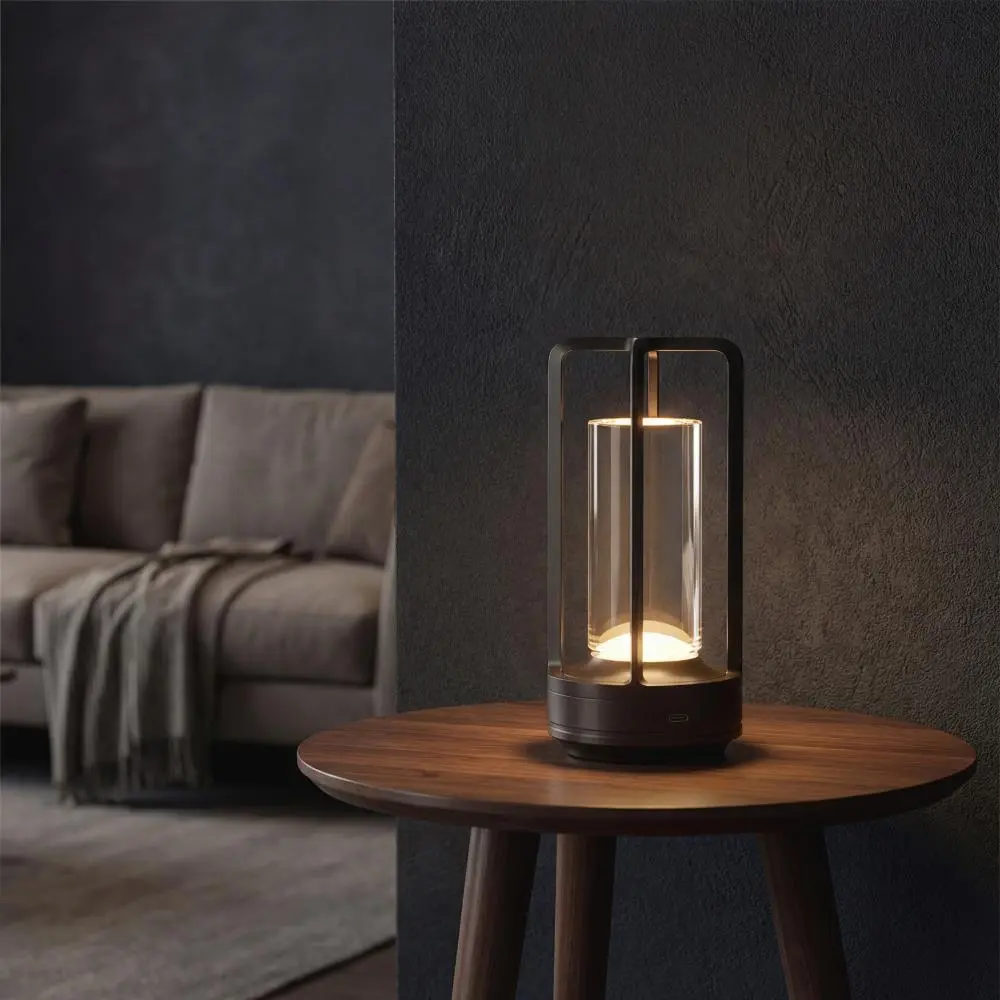
How Often Will You Need to Charge It?
Charging frequency depends on the specific lamp, the brightness you use, and the length of each session. The headline runtime is useful only when its test conditions resemble your routine.
Compare Runtime With Your Normal Evening
Start with your own use. A lamp used for two hours during dinner has a different requirement from one used throughout a long evening. Then check whether the stated runtime applies to maximum, medium, or minimum brightness. An “up to” figure commonly represents the most favorable setting, not necessarily the one you will prefer.
Charging method matters as much as the number of hours. A standard USB-C connection may be easier to replace than a proprietary cable. A contact base can make charging feel effortless if it has a permanent place near an outlet. A visible battery indicator helps you avoid discovering an empty lamp just as you need it. If interruptions would be frustrating, check whether the lamp can operate while charging.
The guide to how rechargeable table lamp runtime changes with brightness explains that relationship in more detail.
Does Battery Age Make a Rechargeable Lamp a Poor Investment?
Battery ageing does not automatically make the lamp a poor purchase, but it should affect which product you choose. Rechargeable batteries gradually hold less energy, so the long-term question is what happens after capacity becomes inconvenient.
Look for a replaceable battery or a stated service route. If neither is available, ask whether the battery, LED module, charging port, or charging base can be repaired. A lamp sold as durable should not become useless because one internal component wears out.
Also separate a credible specification from marketplace repetition. Identical-looking products may be sold under several names, sometimes with different performance claims. A clear manual, traceable manufacturer or brand, model-specific specifications, warranty terms, and accessible support are stronger buying signals than a large number of vague reviews.
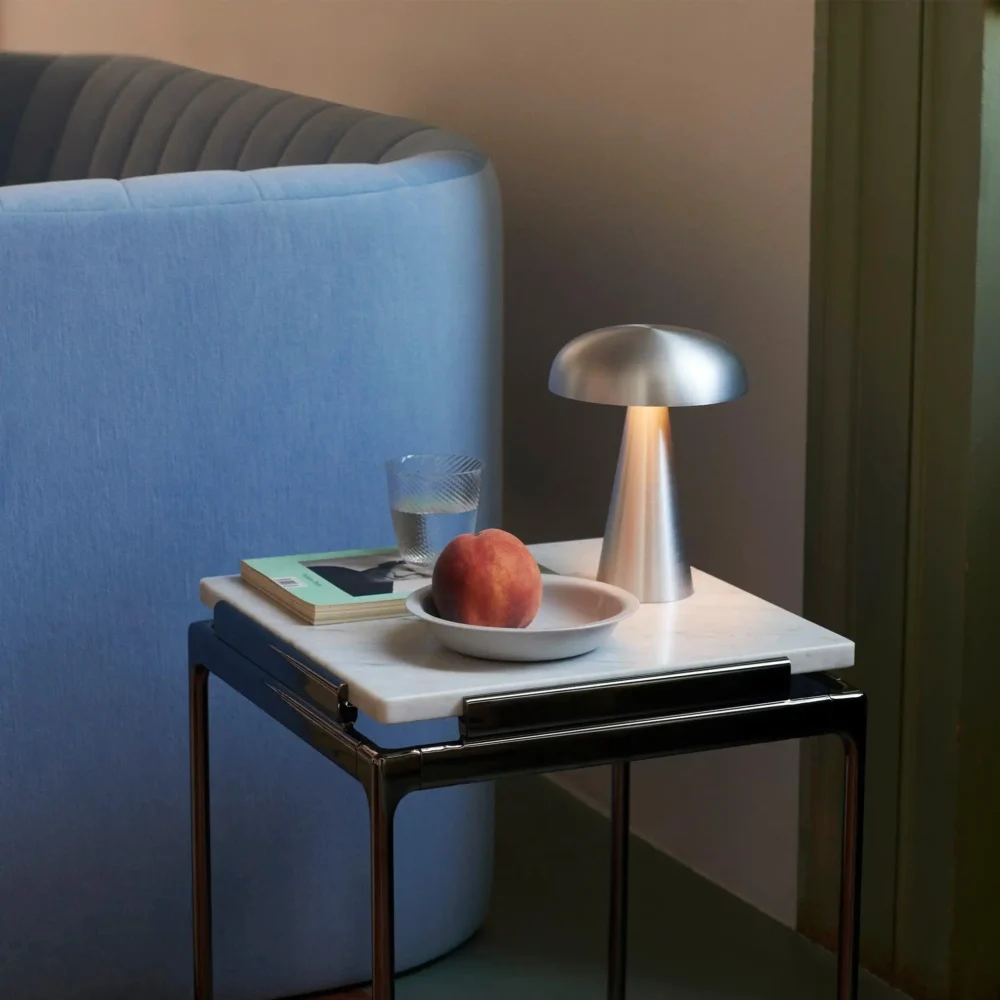
Which Features Make a Rechargeable Lamp Easier to Live With?
The best features are the ones that reduce daily friction. Check these before allowing color or shape to decide the purchase:
A Practical Pre-Purchase Checklist
- Controls: Can you switch it off without cycling through every brightness or color mode? Does it remember your last setting?
- Charging: Is the connector common, is the dock stable, and can replacement charging parts be obtained?
- Battery information: Is runtime stated at more than one brightness level? Is there a useful charge indicator?
- Light quality: Does the color temperature suit the room, and is the light comfortable rather than glaring from a seated position?
- Stability: Is the base heavy and wide enough for the table, especially around children, pets, or busy dining areas?
- Size: Is the lamp tall enough to be useful without blocking conversation or occupying too much table space?
- Serviceability: Can the battery or other wear-prone parts be replaced?
- Outdoor suitability: Does the exact model carry an appropriate published rating? Cordless does not mean weather-resistant.
Touch controls can look clean but are not automatically convenient. Some people dislike searching for a touch point in the dark or accidentally changing modes when moving the lamp. A remote creates another object to store. The simpler control is often better when the lamp will be used every day.
So, Are Rechargeable Table Lamps Worth It?
Yes—if you need movable ambient light where a cord would be awkward and you are willing to recharge it. The placement freedom can be more useful than maximum brightness.
Choose plug-in when the lamp will stay beside an outlet, run brightly for long periods, or support regular reading and work. The right choice depends on which inconvenience you would rather remove: a visible cord or another charging routine.
Developing a Rechargeable Table Lamp for Your Brand? Brightness, runtime, charging design, controls, and battery serviceability shape how customers judge a lamp after purchase. Brands can include these requirements in a private label rechargeable table lamp brief before confirming the product configuration.