Under Canopy Lighting
Factory-direct under-canopy lighting solutions designed for commercial cannabis facilities, greenhouse growers and vertical-farm operators. Featuring 270° ultra-wide beams, full-spectrum 6500K with deep-red 660 and far-red 730, IP65 waterproofing and custom OEM options.
120W IR Spectrum Under Canopy Light
Designed for greenhouses & commercial operations
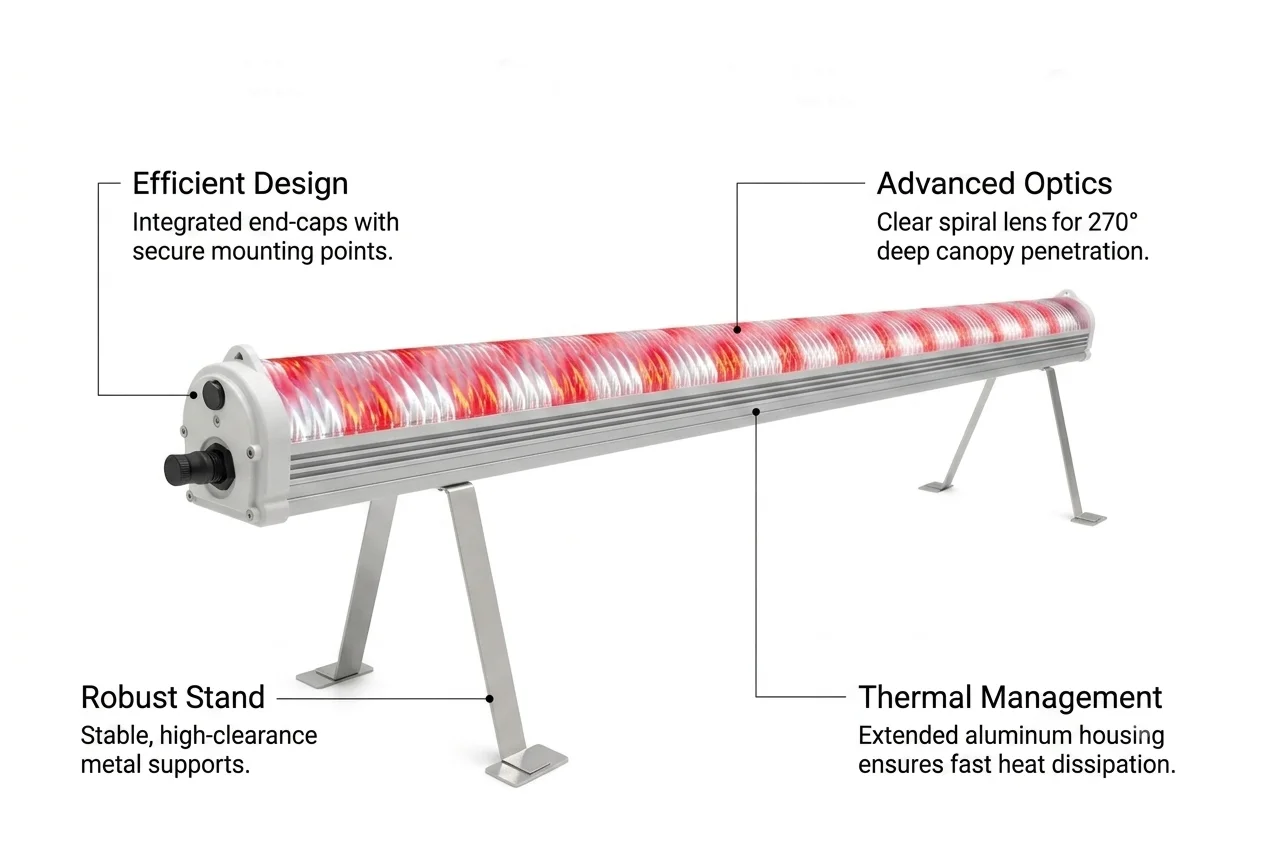
A low-profile inter-row light with a 270° ultra-wide beam that reaches the middle and lower canopy zones top fixtures can’t touch. Recovers yield lost to shading and eliminates shadow blind spots — one fixture does the work of several narrow-angle strips.
- 270° Ultra-Wide Beam Angle — uniform, daylight-like coverage
- PPF 342 µmol/s — PPE 2.85 µmol/J
- Spectrum 6500K + Deep Red 660nm + Far-Red 730nm
- Foldable bracket — Daisy-chain / Plug-and-play
- IP65 Waterproof — built for high-humidity grow rooms
- 0–10V dimming, remote-mountable driver
Scenarios for Under Canopy Grow Light
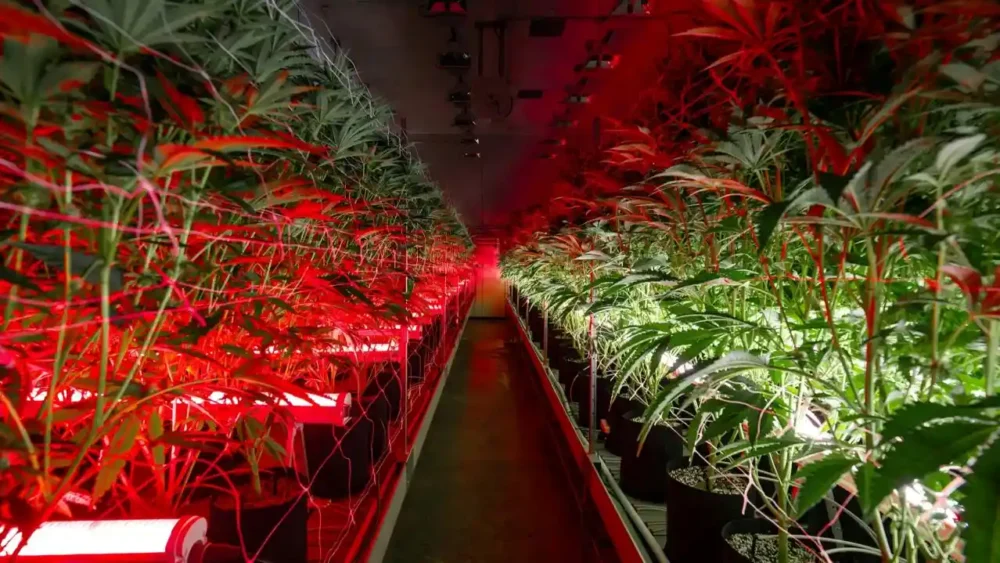
Dense upper canopies block overhead light, leaving lower leaves under-illuminated and unproductive. Our under-canopy LEDs deliver targeted PPFD directly into shaded zones—converting inactive foliage into high-yield biomass.
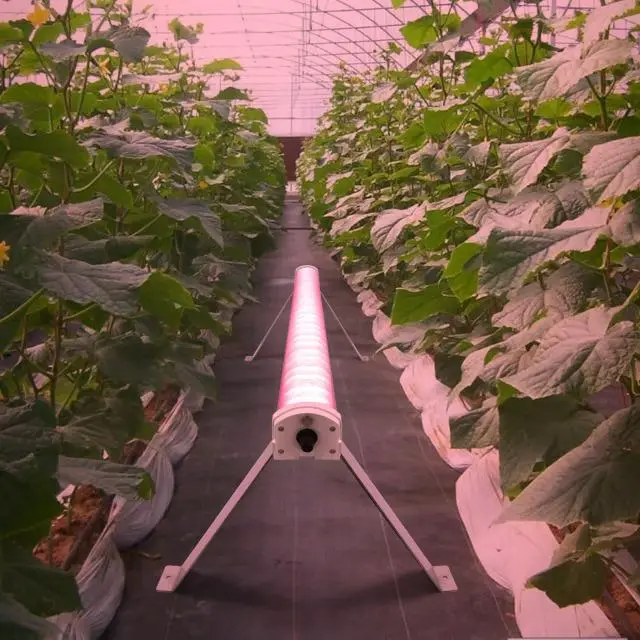
Planting Bed
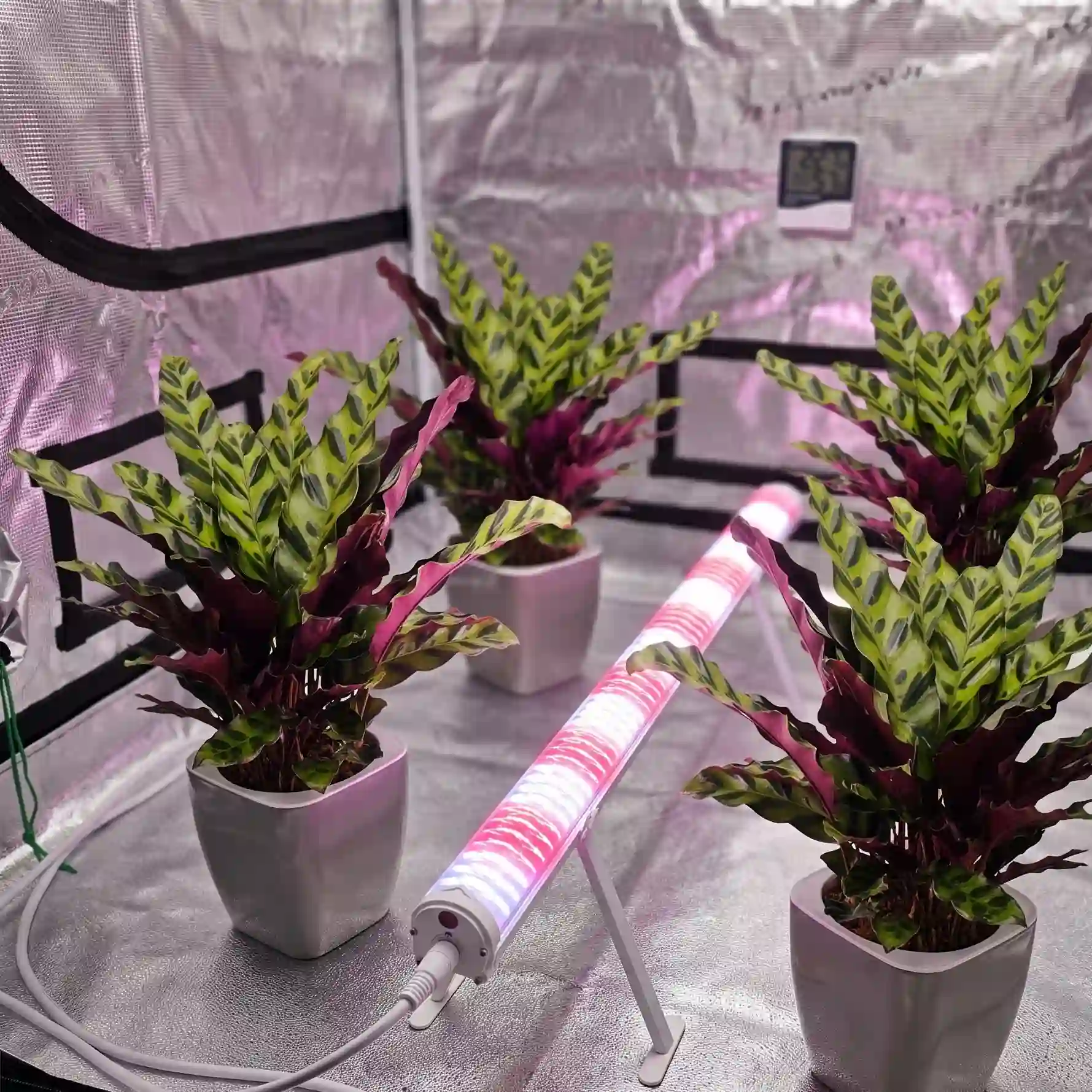
Grow Tent
Greenhouse
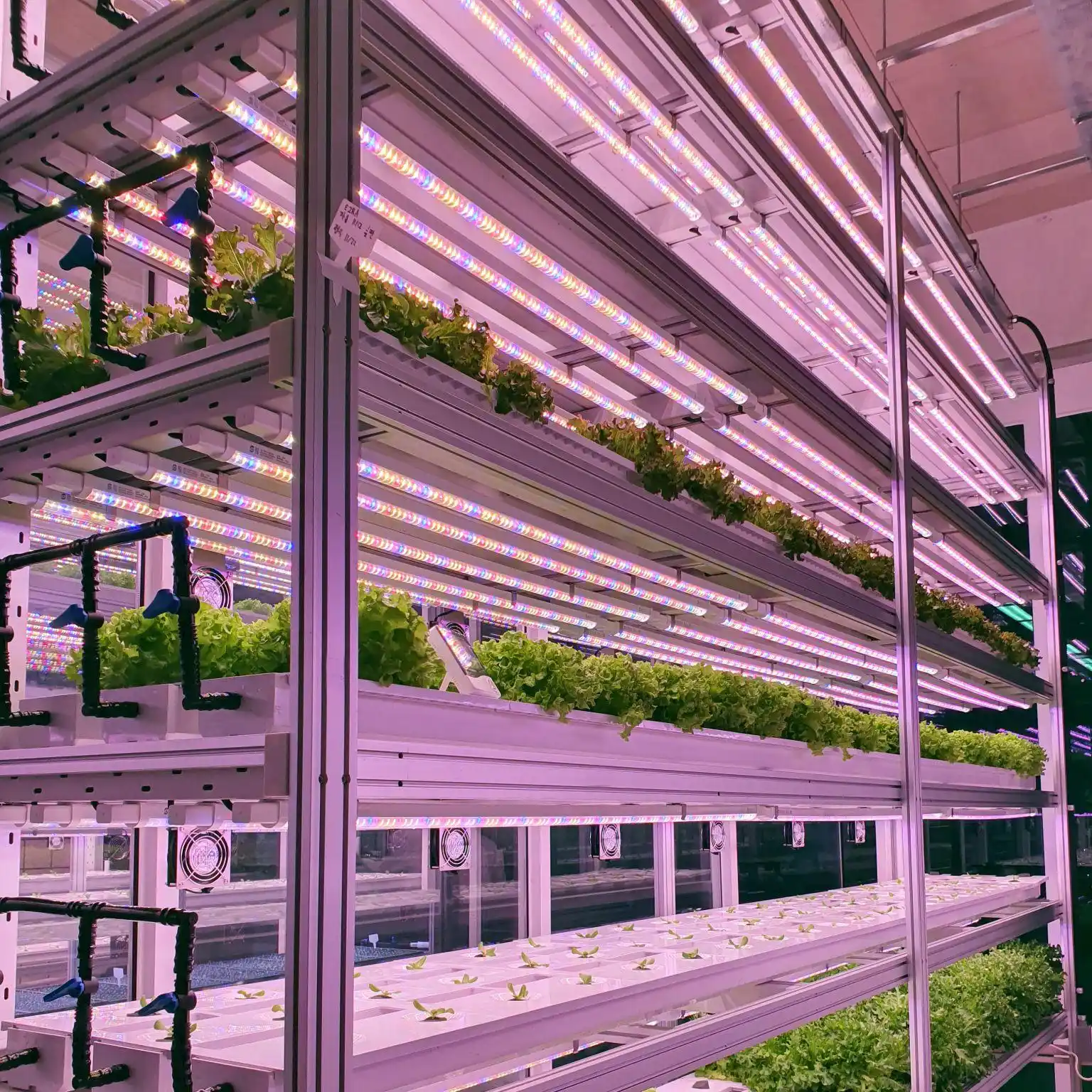
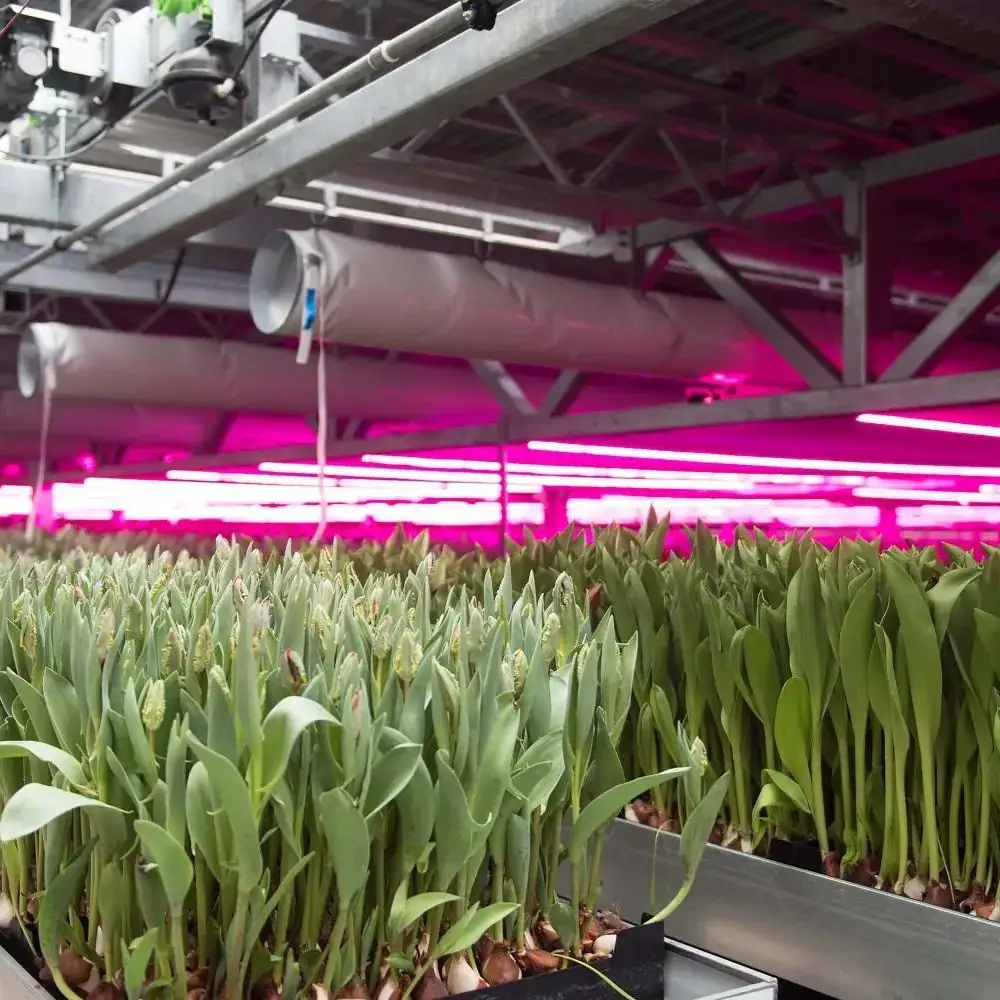
Vertical Farm Tiers
High-Efficiency Full Spectrum
6500K white supplies full-cycle nutrition; deep red 660nm drives flowering and fruiting; far-red 730nm IR boosts yield and biomass. The result: 342 µmol/s PPF at 2.85 µmol/J PPE — production-grade efficiency that keeps operating cost low across dozens of fixtures.
Built to Last
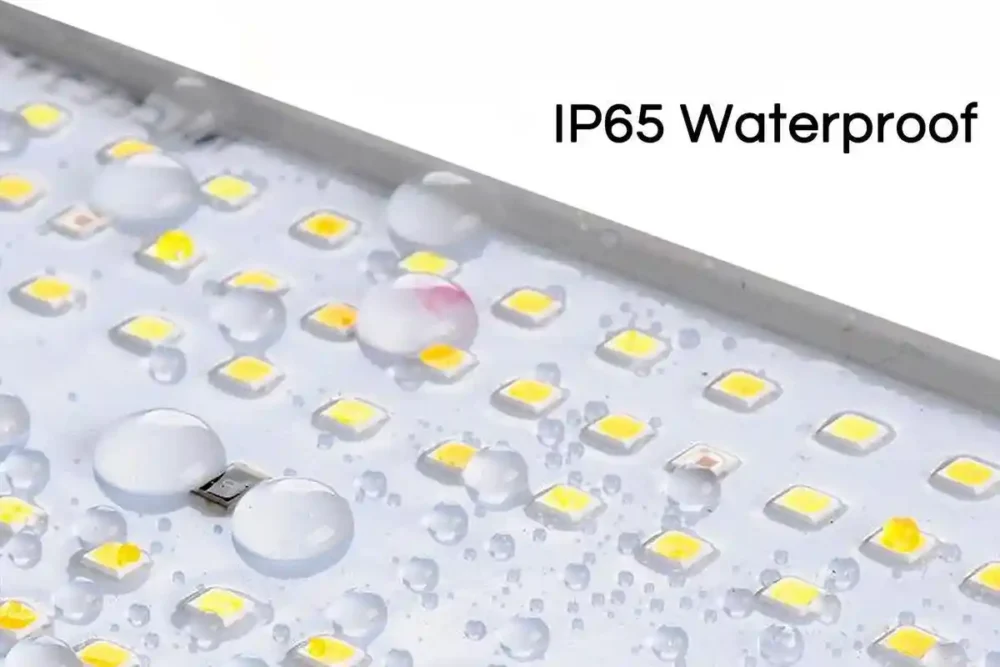
Efficient thermal management keeps the LEDs cool for low lumen depreciation over time. IP65 waterproofing with sealed connectors handles the most humid part of the grow room — directly under transpiring leaves.
Every fixture passes a full lighting aging test before shipment, and L90 > 50,000 hours (LM-80 tested) means years of harvests without replacement.
Flexible Installation Options
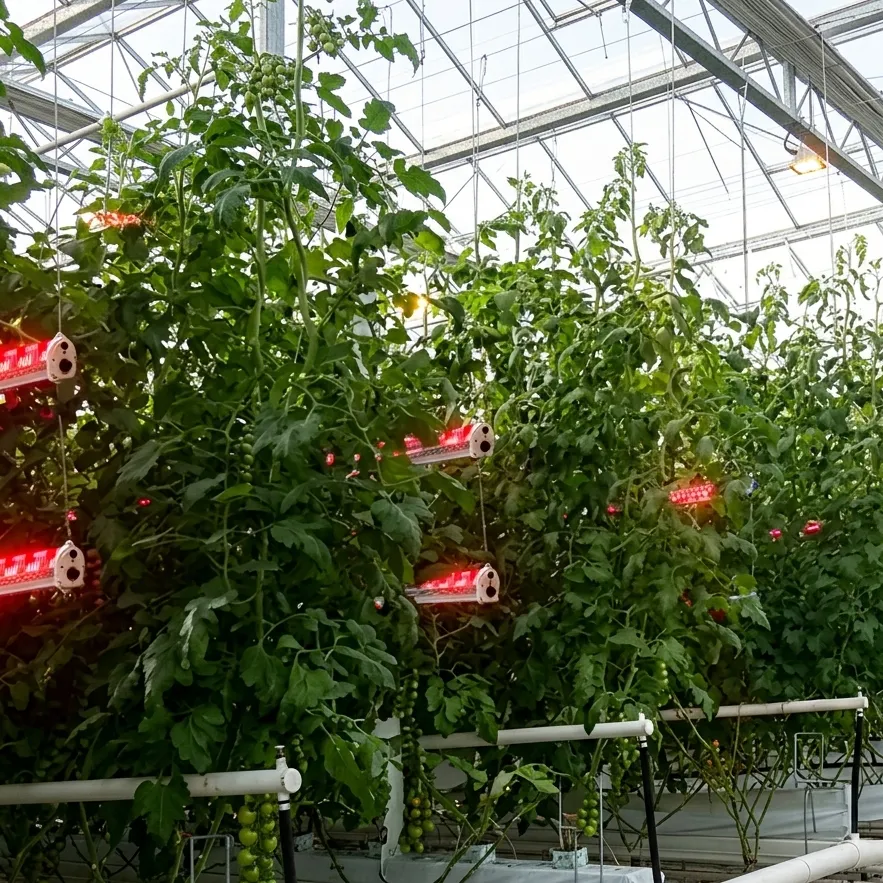
Wire Suspension Installation
Suspend from wires for tall, wide-spaced crops like tomato and cucumber where rows need a clean canopy gap.
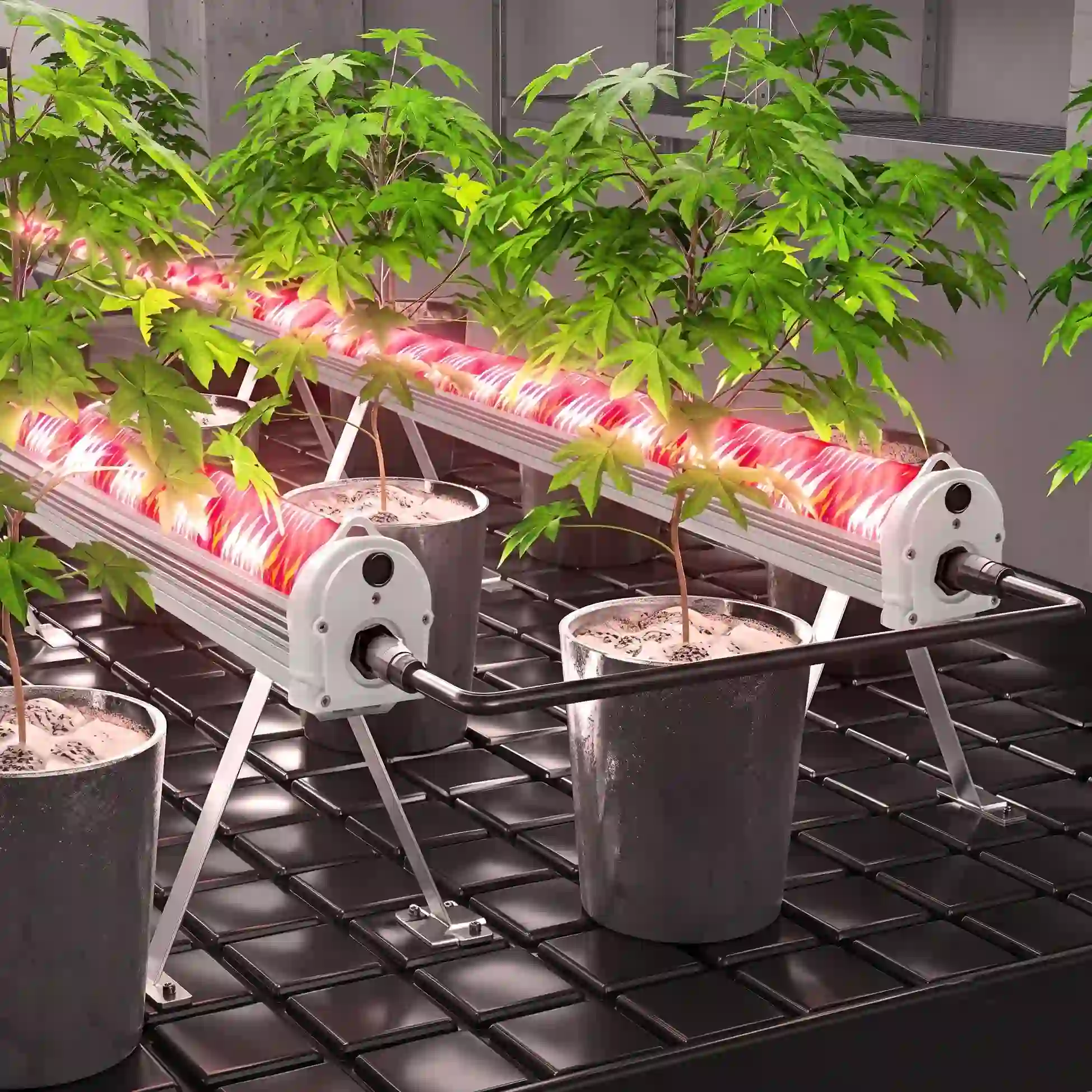
Floor Stand
Sit on a floor or grid stand to light the lower canopy of high-value crops like cannabis from beneath.
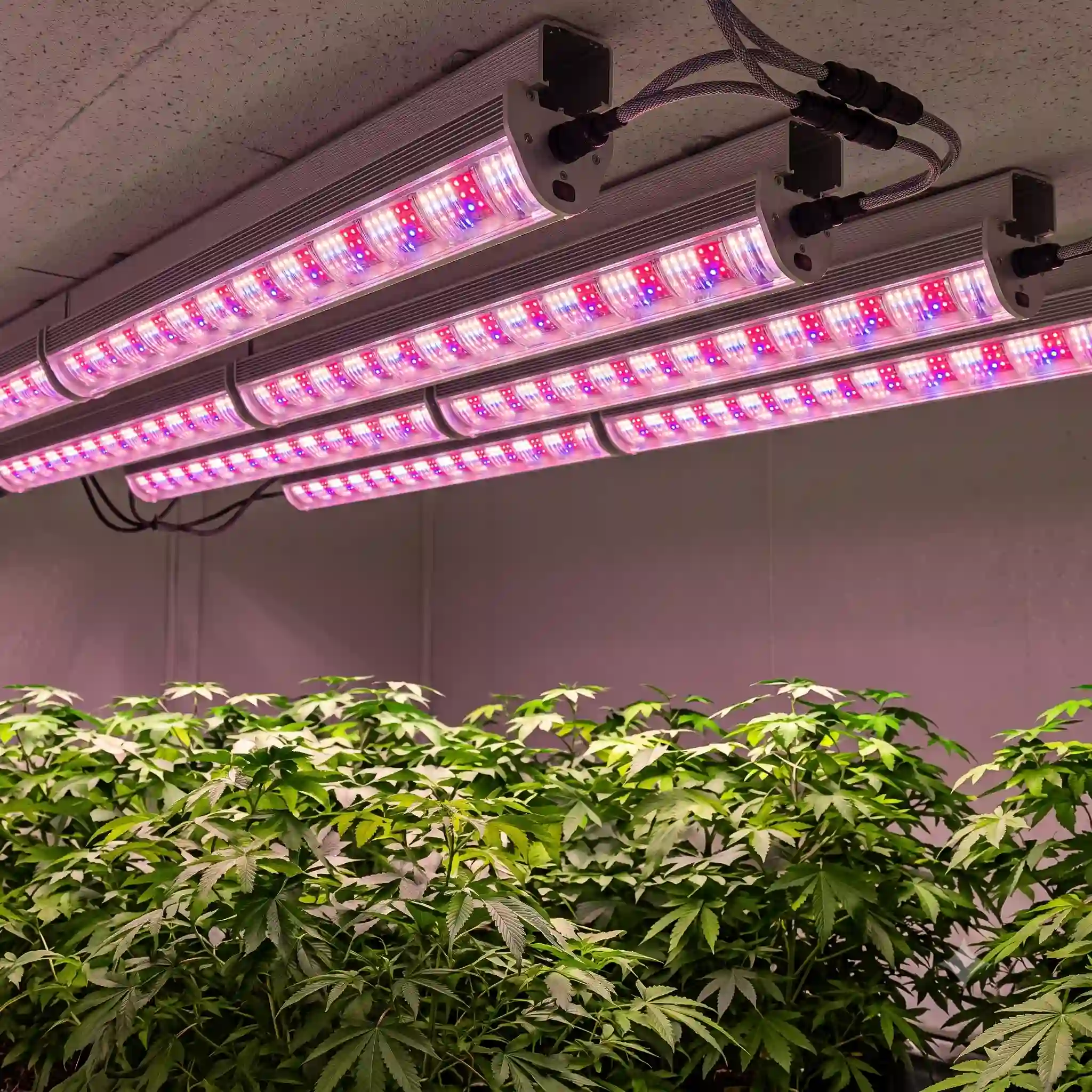
Hanging Top-Mounted
Mount inverted under racks or upper shelves to supplement light for multi-layer and shelf systems.
Technical Specifications
| Model Number | 120W Under Canopy Lights |
| Power | 120W ±5% |
| Input Voltage | 100–277VAC / 277–480V AC 50/60Hz |
| LED Driver | Inventronics / Sosen / Fahold / Juson |
| PPF (380–780nm) | 342 μmol/s |
| PPE | 2.85 μmol/J |
| Color | 6500K + 660nm + 730nm |
| Coverage | 4 * 1.5 ft |
| Lifespan | L90: >50,000小时 |
| Input Voltage AC | 120V / 220V / 240V / 277V |
| Input Current at 100% | 1A / 0.54A / 0.5A / 0.43A |
270° Wide Angle vs. Traditional Narrow-Angle Strips
Traditional / Narrow-Angle
- ✕ Narrow beam angle (<120°)
- ✕ Uneven light distribution
- ✕ Shadow blind spots between rows
- ✕ Needs multiple fixtures stacked for full coverage
- ✕ Localized hotspots risk burning leaves
iLEDGlow 270° Wide Angle
- ✓ Ultra-wide 270° coverage
- ✓ Extremely uniform, daylight-like spread
- ✓ Eliminates shadow blind spots
- ✓ One fixture covers more growing area
- ✓ Eliminates risk of burns — no local hotspots
FAQs of Under Canopy Light
What PPFD does the lower canopy actually need?
Target 300–400 μmol/m²/s at the lowest productive buds. Below 100 μmol/m²/s, leaves stop being net contributors. Two of our 120W strips per 4×4 tier deliver 300–450 μmol/m²/s — enough to convert unproductive buds into marketable flower.
Can I customize the spectrum for my crop?
Yes — white/red/far-red ratios can be tuned for your specific crop type and growth stage. Our R&D team works with you to dial in the spectrum before production.
What are the MOQ and lead time?
For existing models with logo/packaging customization: MOQ 100–500 pcs, lead time 3–4 weeks. For ODM projects with new tooling: the MOQ may be higher. Lead time may takes 6–8 weeks depending on complexity.
How are dimming and scheduling controlled?
Under Canopy Lights do not include built-in timers or onboard dimming controls. For commercial greenhouse and indoor farming applications, lighting schedules and intensity are managed through external controllers, enabling synchronized dimming, scheduling, and group control of multiple fixtures.
Should I use under canopy lighting instead of more powerful top lights?
Not instead — in addition. More powerful top lights don’t solve the penetration problem. Research shows cannabis yield responds to total PPFD from both above and below. The best results come from using both at full intensity.
What certifications do we have?
CE, RoHS, FCC. Additional certifications for your target market can be arranged — discuss with our sales team.
Contact Us
Plan Your Under Canopy Lighting
Send us your facility specs — crop, area, light intensity, quantity — and we’ll recommend a configuration with pricing within 12 hours.