
A cordless table lamp in a restaurant lives a hard life. It gets charged every night, wiped down between services, splashed with wine, and knocked by a passing tray cart. Then one winter it sits in a storage room for a month. Most operators expect two or three years out of these lamps. Some get four. A lot don’t make it past the first.
After years of putting rechargeable lamps into dining rooms, here’s the short version: the lamp is rarely the problem. The care is. How you charge it, clean it, and store it decides whether that lamp works for two years or four — usually more than the brand or the price tag.
This guide covers the three habits that kill cordless lamps early, the cleaning mistakes that send them to the bin, and the questions to ask before you order your next batch. New to the category? The cordless table lamp range is a good place to start.
Why Most Restaurant Lamps Fail Early
Early failure is almost never a hardware fault. It’s three habits: draining the battery to empty before recharging, cleaning the lamp with the wrong product, and storing it somewhere too warm.
A lithium-ion cell shows visible capacity loss after roughly 500 charge cycles. For a lamp charged nightly, that’s about two years. That number is physics, not quality — it applies to a premium designer lamp exactly as it does to a budget import. What changes it is how you treat the cell.
Run a battery to zero every night and leave it empty, and you speed up that loss. Keep the same lamp topped up in partial cycles, and 500 cycles can stretch past three years. Same cell, same lamp, different lifespan.
This is where operators usually get it backwards. The instinct is to spend more on the lamp to dodge the maintenance. But a premium lamp charged the wrong way will still fade by year two, while a budget one cared for well often makes year four. Spend on habits, not just hardware.
Charging Habits That Extend Battery Life
Don’t let a cordless lamp run flat before you charge it. Partial charge cycles strain a lithium battery far less than a full drain followed by a full refill.
In a dining room, that means making charging part of the close. Collect the lamps after the last seating, set them on the charging station, and let them top up overnight. A lamp that starts every service at 100% and never gets deep-discharged will outlast one that runs to 10% before anyone plugs it in.
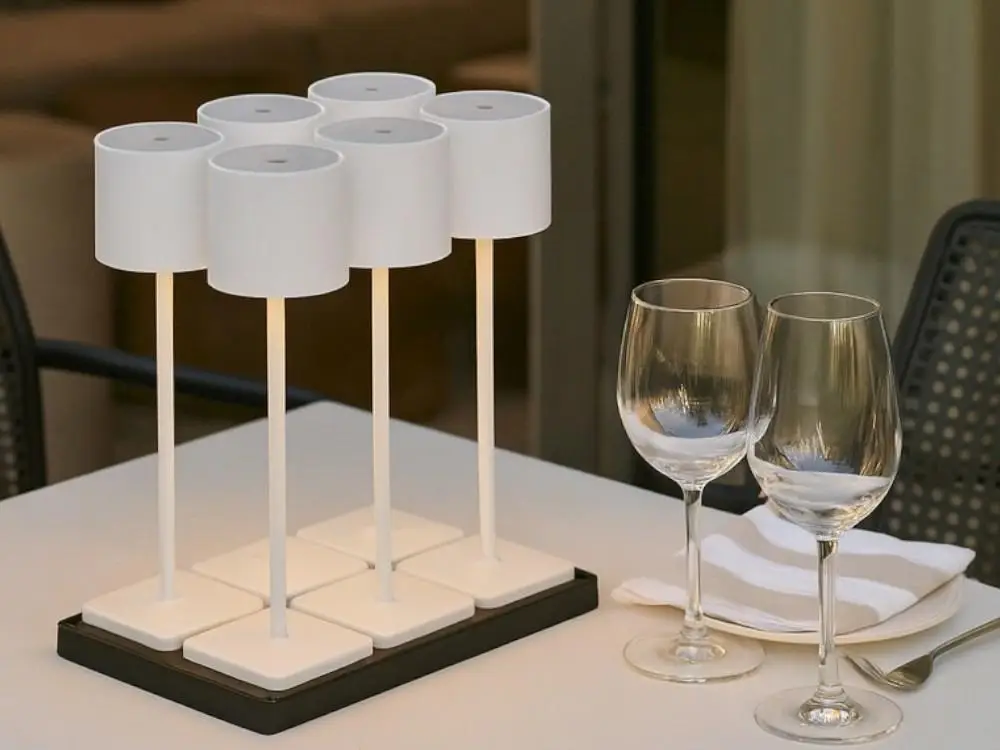
The charging method matters too. Contact charging — the lamp sitting on a base with pins or a magnetic contact — runs above 90% efficient and never wears out a port. A USB-C socket plugged and unplugged 700 times a year is a wear point; the contacts under a base are not. That’s why most commercial cordless lamps charge from a base rather than a cable.
One thing I steer restaurant operators away from: Qi wireless charging at fleet scale. It runs at 60–80% efficiency, and the wasted energy leaves as heat — exactly what accelerates battery aging. Fine beside a sofa at home. Wrong tool for 50 lamps charged every night.
Cleaning a Cordless Lamp the Right Way
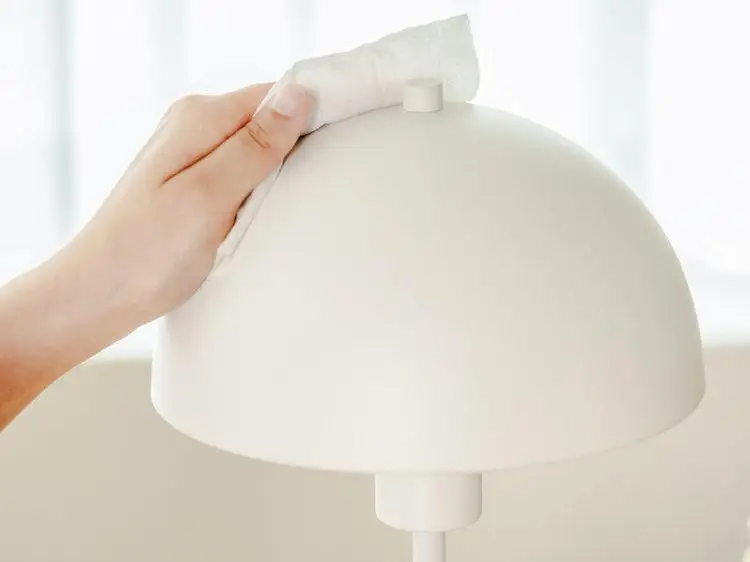
Switch the lamp off and unplug it before you clean anything. Then wipe with a dry lint-free cloth, or a slightly damp one. That’s the whole system for the housing.
The finish decides the rest:
| Finish | Clean with | Avoid |
|---|---|---|
| Glass shades | Silicone-based cleaner on a soft cloth | Abrasives, soaking in water |
| Brass | Polish applied to the cloth, then buff | Spraying cleaner directly on the lamp |
| Stainless steel | Damp cloth; steel polish for stubborn marks | Steel wool or scouring pads |
| Fabric shades | Vacuum or a lint roller | Spray cleaner — it leaves permanent stains |
The expensive mistake is solvents. Alcohol, acetone, anything with chemicals strips the coating off the housing and leaves a sticky film that catches dust. I’ve seen brand-new lamps sent back to the factory because someone cleaned them with glass cleaner. When the label says “no chemicals,” it means it.
Clean the charging contacts once a month with a dry cloth. A thin film of grime on the pins is the most common reason a lamp “suddenly stopped charging.”
Storage During Closures and Seasonal Downtime
When a restaurant closes for a week or a season, charge the lamps to about 50% before they go into storage. Not full. Not empty. Lithium cells sit happiest at half charge.
Then top them up once a month. A lamp given a monthly partial charge comes back ready to work. One left empty for two months comes back with dead cells — the most common way lamps die during a closure, not during service.
Keep them cool and dry. Heat is the quiet killer: a storage closet beside a kitchen that hits 35 °C in summer degrades cells faster than two years of normal use. For outdoor lamps coming in for winter, clean them first, then store indoors. A damp season of storage does more damage than a season of rain.
Buy Lamps That Are Built to Be Maintained
The question that matters most at buying time is simple: can the battery be replaced? The LED in a lamp is rated for 50,000 hours, and the battery is not. The difference between a sealed lamp and a replaceable one is the difference between a small repair and a whole new lamp.
A sealed-battery lamp that degrades after two years is, in practice, a disposable lamp. You bin the whole unit and buy another. A lamp with a replaceable 18650 cell takes a five-minute swap on site, and the lamp keeps running for as long as the LED does — years longer.
So ask three questions of any supplier before you commit:
- Can the battery be replaced, and is it a standard cell or a proprietary one?
- How does it charge — a contact base, or a socket?
- Can the housing be opened for cleaning and servicing?
Maintenance Is a Buying Decision
Maintenance isn’t something that happens after you buy the lamps. It’s a decision you make at order time. A lamp designed to charge gently, clean simply, and repair on site costs a little more upfront and saves you money every year after — and it’s still on the table when the cheap one is in the bin.
Before your next order, add these to your RFQ: Is the battery replaceable? How does it charge — contact or cable? And what does the care schedule look like? Ask them honestly, and the lamps you buy this year will still be working when you renew the lease. If you’re still weighing the bigger choice, the cordless vs wired comparison covers the total cost picture venue by venue.