
If you are buying lighting for a restaurant or hotel, one of the first specifications on most product pages is color temperature — measured in Kelvin (K). Most suppliers will list their fixtures as “warm white” or “2700K.”
What is easy to overlook: color temperature directly affects how long guests stay, how much they spend, and how your food looks in photos. Pick the wrong one, and even a well-designed space can feel cold or uninviting.
This guide is written for hospitality buyers, hotel procurement managers, and restaurant owners. It covers what the numbers mean, what to choose for your project, and what first-time buyers sometimes overlook.
Why Color Temperature Matters In Hospitality Lighting
Restaurants and hotels sell more than food — they sell atmosphere. Color temperature is one of the key tools for shaping that atmosphere.
For the same space, three different color temperatures create three completely different guest experiences:
- 2200K — Deep amber, candlelight-like. Intimate and luxurious. Encourages guests to relax and linger.
- 2700K — Warm white. Welcoming and comfortable. The standard for most hospitality environments.
- 3000K — Soft white. Slightly crisper while still feeling warm. Good for casual dining and cafés.
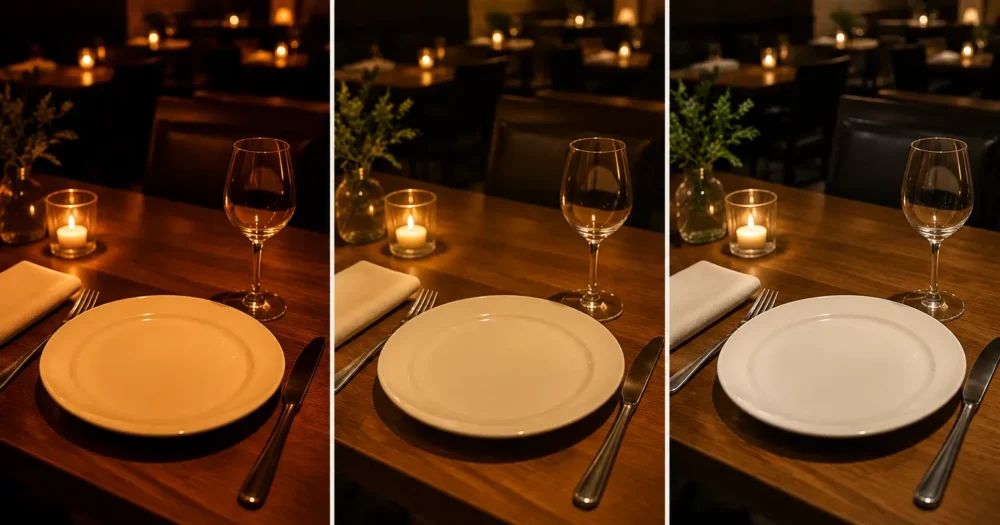
Many buyers assume any warm fixture will do — but the difference between 2200K, 2700K, and 3000K is immediately noticeable on food and skin tones, and it directly influences how guests perceive the quality of your space.
Understanding Color Temperature
Color temperature is measured on the Kelvin (K) scale. Simple rule: lower number = warmer light, higher number = cooler light.
Here are the key reference points for hospitality buyers:
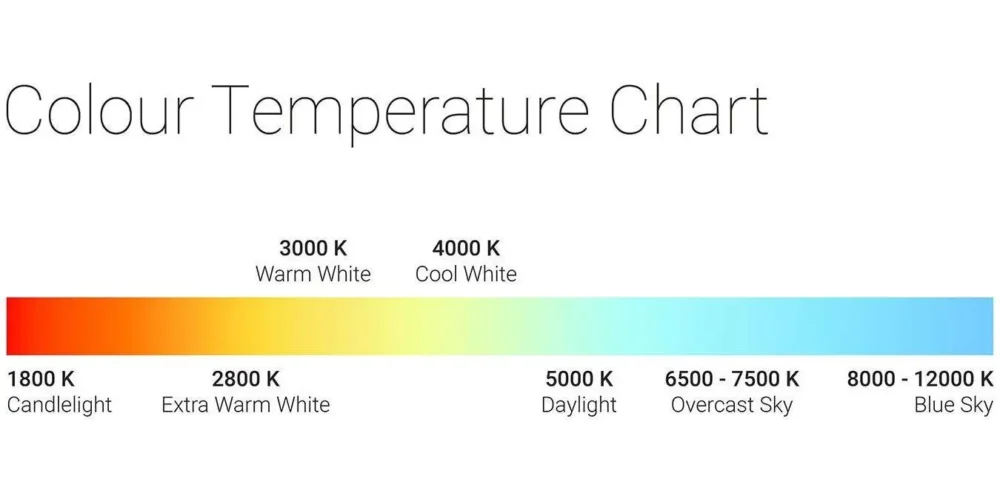
- 2200K — Warm candlelight atmosphere. Used in high-end restaurants and lounges.
- 2700K — Warm hospitality lighting. The most common choice for hotels and restaurants.
- 3000K — Balanced commercial lighting. Warm enough for comfort, bright enough for visibility.
- 4000K — Neutral white. Common in retail, offices, and back-of-house.
- 5000K — Daylight. Excellent for task lighting and frequently used in commercial kitchens (though 4000K is also highly popular to reduce eye strain).
For hospitality projects, your range is almost always 2200K to 3000K.
Recommended Color Temperatures For Different Hospitality Spaces
This table is your quick reference when evaluating lighting for different hospitality applications:
| Application | Recommended CCT | Why |
|---|---|---|
| Fine Dining Restaurants | 2200–2700K | Premium and intimate atmosphere. Warm light enhances red meat, wine, and rich sauces. |
| Casual Restaurants | 2700K | Warm and welcoming. Comfortable dining without feeling dim. |
| Cafés & Bars | 2700–3000K | Comfortable and lively. High CRI makes food and drinks look their best. |
| Hotels & Resorts | 2700–3000K | Relaxing guest experience. Warm lighting in rooms helps guests wind down. |
| Outdoor Dining | 2700–3000K | Natural evening ambience. Weather-resistant outdoor lamps at 2700K maintain indoor-to-outdoor warmth continuity. |
| Retail Displays | 3000–4000K | Cooler light makes modern or metallic merchandise colors pop, though luxury boutiques often stick to 3000K for a premium feel. |
Should you choose 2700K or 3000K? If you are unsure, 2700K is the safest choice for most restaurants and hotels — it creates a warm, welcoming atmosphere while keeping food and skin tones natural. Choose 3000K if your space prioritises visibility, has modern interiors, or aims for a slightly faster-paced dining experience.
Why Two 2700K Fixtures Can Look Completely Different
Here is something every hospitality buyer should know: you can order two “2700K” fixtures from two different suppliers, set them up next to each other, and see two completely different colors. One looks warm and rich. The other looks flat, or even slightly greenish.
Why does this happen? It usually comes down to color consistency (often measured in SDCM or MacAdam Ellipses) and Duv (tint). A fixture with poor color control might drift above the black body curve, giving off an unwanted green tint. Because color temperature is just one of several specifications that determine what the light actually looks like in your space. When you are comparing supplier quotes, you need to check all of these — not just the Kelvin number.
CRI (Color Rendering Index)
This is probably the most important specification after color temperature, and the one most suppliers try to lowball.
Here is what CRI means for your restaurant: A fixture with CRI 80 takes a medium-rare steak and makes it look brownish-grey. The same 2700K at CRI 95 makes that same steak look rich and red. The food itself has not changed. The customer’s perception of freshness and quality has.
As a buyer, here is your rule of thumb:
- CRI 80 — Supermarket aisle lighting. Acceptable for storage rooms, not for dining.
- CRI 90 — The minimum standard for any guest-facing area. You should not go below this.
- CRI 95+ — What you want for fine dining or any concept where food presentation matters.
There is also R9 (red rendering). If your menu features steak, red wine, pasta with tomato sauce, or anything with warm red tones, you want a fixture with strong R9. Standard CRI (Ra) is based on 8 pastel colors and actually excludes saturated red. The R9 score specifically tells you how good deep reds will look. Many fixtures with decent overall CRI still score poorly on R9.
Brightness — Why The Same Kelvin Can Feel Warm Or Neutral
Two fixtures at the same 2700K can create completely different atmospheres, depending on brightness.
A dim 2700K fixture creates a warm, intimate mood — ideal for evening dining or lounge areas where you want guests to relax and linger. A bright 2700K fixture can feel almost neutral or cool by comparison, even though the Kelvin number is identical.
Why this matters in procurement: When you compare brightness across suppliers, you need to look at lumens, not wattage. Two fixtures may both be labelled “2700K 12W”, but produce very different lumen outputs. You want enough brightness for your wait staff to work comfortably while keeping the atmosphere appropriate for the dining concept.
For most restaurant settings, you also want dimmable drivers. This lets you adjust the brightness from lunch service (brighter, more functional) to dinner service (dimmer, more intimate) using the same fixtures. Just one catch: not all dimmable LEDs dim smoothly — see the mistakes section below.
Beam Angle — Does Light Land Where It Should?
Have you ever sat at a restaurant table where the food looked great but half the table was in shadow? That is usually a beam angle problem, not a brightness problem.
What you need to know when ordering:
- 30°–40° beam — Concentrates light directly on the plate. Best for standard dining tables where you want food to be the focal point.
- 50°–60° beam — Spreads light across a larger area. Better for round tables, lounge seating, or banquettes where multiple diners share the light.
- 120°+ beam — Wide flood. Used for ambient lighting, not for task illumination over tables.
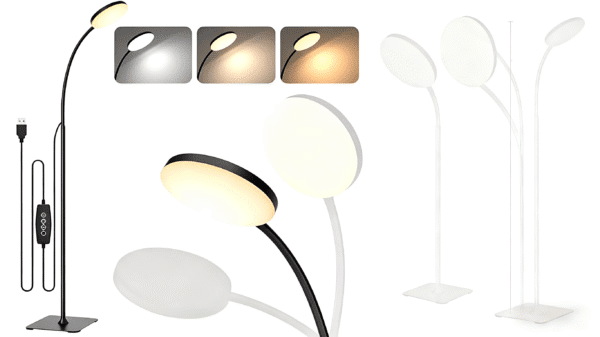
When you are sourcing fixtures, think about your table layout first. Standard 4-person square tables work well with narrow beams. Large communal tables or curved booths need wider beams — or you end up with uneven lighting that makes some seats feel less desirable than others. If you are using table lamps, clamp lamps, or floor lamps, each type has a different ideal range.
Which Color Temperature Should Your Restaurant Use?
If you made it this far, here is the short version:
- Fine dining or high-end hotel dining → 2200K–2700K. Warm and intimate. Enhances red meat and wine. Your guests will linger and order another round.
- Casual restaurant or all-day dining → 2700K. The safest choice. Warm enough for comfort, bright enough for the lunch crowd. Works with every cuisine.
- Café, bar, or brunch spot → 2700K–3000K. Keeps the energy up without feeling cold. High CRI is non-negotiable here — your pastries and cocktails need to look as good as they taste.
- Commercial kitchen or back-of-house → 4000K–5000K. Functional lighting for food prep and cleaning. Not for guest-facing areas.
And when you compare fixtures from different suppliers, do not stop at the Kelvin number. Check CRI (90 minimum for dining areas, 95+ for fine dining), compare actual lumen output (not wattage), match beam angle to your table layout, and ask about SDCM binning to make sure every fixture in your order looks the same.
For OEM and bulk hospitality projects, these specifications should be defined in writing before production begins.