
When choosing table lamps for restaurants, hotels, cafés, or outdoor dining areas, buyers often focus on appearance and unit price first. But in hospitality environments, the lowest upfront cost does not always mean the lowest operating cost.
Unlike residential lighting, commercial table lamps are moved, cleaned, and exposed to daily wear. Material choice affects more than durability — it influences weight, heat management, appearance, and long-term value.
This guide compares aluminum and plastic table lamps from a hospitality buyer’s perspective: which material fits different operating environments and delivers better value over three to five years. If you have not yet settled the cordless-versus-wired decision, start there; this comparison assumes the lamps are already cordless.
Why Material Matters in Commercial Use
A restaurant lamp is part of daily operations, not decor. Consider what happens to it in a normal week:
- Servers move it when setting and clearing tables
- Guests knock it over during busy service
- Staff wipe it down multiple times a day
- Outdoor areas expose it to wind, moisture, and sun
Each incident takes a small toll. Over a year, small tolls are often the difference between replacing lamps early and still running the same fixtures several seasons in. If you are buying durable restaurant table lamps for a venue that runs every day, the material is where much of that lifespan is decided — not the price tag.
Key Differences Between Aluminum and Plastic Table Lamps
Aluminum and plastic are not “strong versus weak.” They change different things, and each change matters only in certain operations. The table maps the differences a buyer can act on.
| Factor | Aluminum | Plastic |
|---|---|---|
| Typical weight, cordless lamp | 0.8–1.2 kg | 0.4–0.6 kg |
| Outdoor performance | Generally longer with proper coating | Depends heavily on plastic grade and UV resistance |
| LED operating temperature | Passive heat dissipation supports LED performance | More heat retained in higher-output designs |
| Finish over time | Holds finish well when coated properly | Can fade, yellow, or turn chalky depending on grade |
| Stability on the table | Heavier, lower center of gravity | Lighter, easier to knock over |
| Guest perception | Premium | Budget, unless very well finished |
Commercial table lamps for restaurants and hotels come in both materials — quality comes from construction and finish, not the material name. Which you need depends on three things: how often the lamp moves, whether it sits outdoors, and how much appearance matters.
Why Lightweight Table Lamps Matter for Restaurants
Sitting at a desk, aluminum wins. At 11 pm — when staff collect 30 lamps and carry them to the charging station — the math flips.
A cordless aluminum lamp with its battery typically weighs 0.8 to 1.2 kg. A comparable plastic one runs 0.4 to 0.6 kg. For one lamp the difference is nothing. For 30 lamps, six nights a week, it becomes extra minutes per close and real strain on your crew.
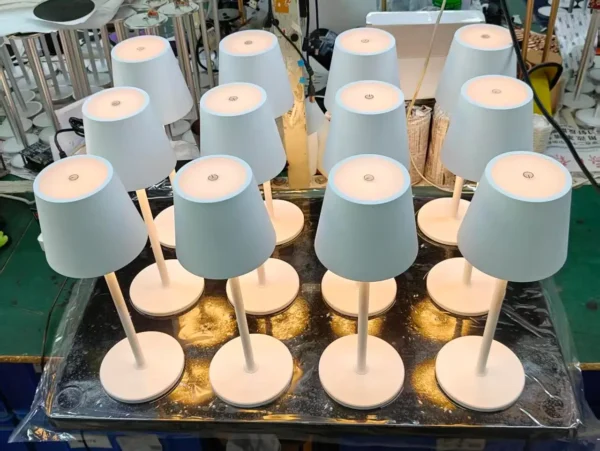
This is the one place plastic genuinely wins. If your venue moves lamps daily — patios, flexible dining, high table turnover — the lighter material cuts a recurring labor cost. Before ordering a cordless table lamp run, ask the supplier for the exact weight per unit.
What Makes Restaurant Table Lamps Durable
Guides usually measure impact strength, as if lamps fall off ladders. In a restaurant the real wear is slow, and the two materials age differently:
- Plastic degrades. Low-grade plastics turn chalky and brittle after extended UV exposure, heat yellows them, and thin grades soften near the driver. Good grades last far longer.
- Aluminum dents. A scratch or dent stays visible. Cheap castings pit over time. It does not crumble — it shows its age on the surface.
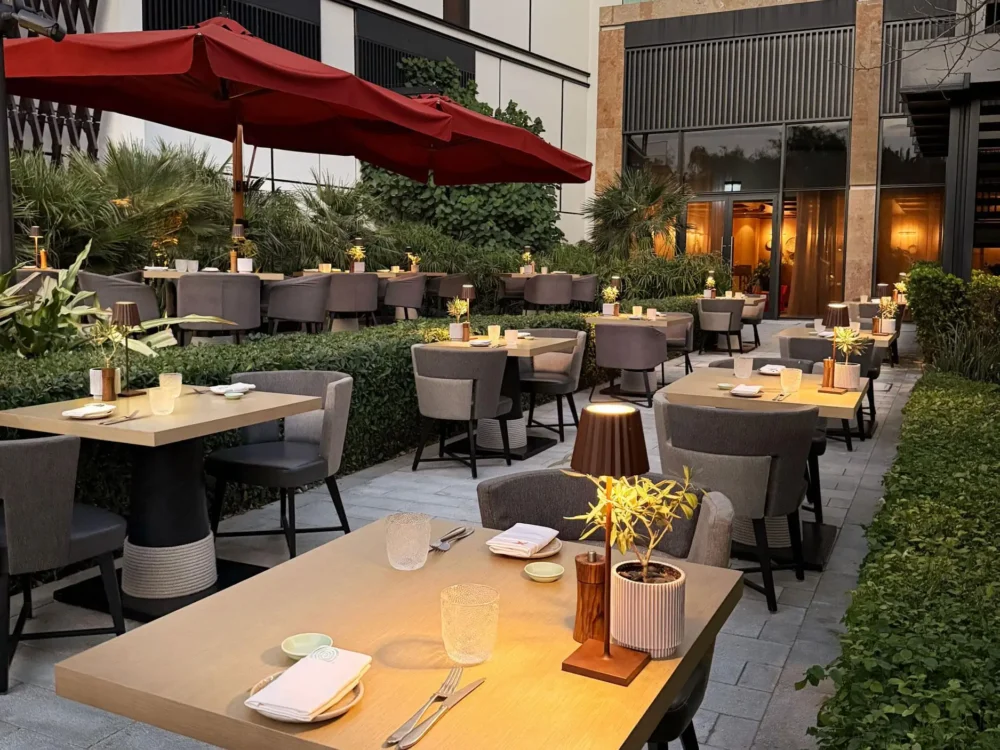
Outdoor dining is among the fastest-growing uses for rechargeable table lamps for restaurants, and it is where the material choice matters most. Powder-coated aluminum generally handles rain, salt air, and midday sun. UV-stabilized plastic survives, but the finish can fade over time. If you are comparing durable restaurant table lamps for a patio, rooftop, or poolside, treat outdoor lifespan as the deciding factor — and ask how the finish is protected.
Heat, Finish, and How Guests See It
Heat and finish are the other two differences — easy to miss in a quote, impossible to ignore in daily use:
- Heat. Aluminum generally provides better passive heat dissipation than plastic, which helps maintain LED performance in higher-output designs. A plastic lamp with lower power and a sensible body design can be perfectly reliable — the question is whether the design accounts for heat.
- Finish. A brushed aluminum lamp catches the light and reads as premium. Some designers and hospitality buyers avoid low-quality plastic finishes for guest-facing areas, because the material affects perceived value. The distinction is low-quality plastic — premium polymers and composites appear in high-end designs too.
If the lamp is visible on a dining table, the material is part of the product you are selling. If it lives in back-of-house or function rooms where guests never scrutinize it, plastic saves real money with little downside.
When Plastic Table Lamps May Be the Better Choice
Although aluminum offers many advantages, plastic table lamps are not always the wrong choice.
Plastic can be suitable for:
Large-scale events
Temporary lighting installations
Budget-focused projects
Applications where lightweight products are preferred
For example, an event company managing hundreds of temporary table settings may prioritize lower cost and easy transportation.
The key question is not “Is aluminum always better?”
Instead, buyers should ask: Does the lamp need to withstand frequent commercial use and represent a premium customer experience?
For long-term restaurant and hotel applications, durability and appearance usually become more important.
A Simple Way to Choose Table Lamp Materials
Instead of deciding “aluminum or plastic” in the abstract, match the material to the floor:
Choose aluminum when:
- The lamps sit on dining tables daily, in a venue where appearance and longevity matter
- Any part of the space is outdoors — patios, rooftops, poolside
- You expect to keep the lamps for several years
Choose plastic when:
- The operation is high-turnover and staff move and handle lamps constantly
- The lamps are temporary — events, pop-ups, seasonal setups
- Budget is the binding constraint, and the plastic grade and warranty check out
| Application | Recommended Material |
|---|---|
| Fine dining | Aluminum |
| Hotel lobby and guest rooms | Aluminum |
| Outdoor patio and rooftop | Aluminum (powder-coated) |
| Events and pop-ups | Plastic |
| Temporary catering | Plastic |
Neither choice is wrong. The wrong choice is buying the cheaper material for a floor that needs the expensive one — or paying for premium material your operation never benefits from.
Make the Right Material Choice for Your Hospitality Project
Make the Right Material Choice for Your Operation
Aluminum and plastic table lamps both have their place in hospitality applications. The better choice depends on how your lamps will be used, not just the initial purchase price.
Before placing an order, consider:
Daily usage frequency: High-traffic restaurants and hotels usually benefit from more durable materials.
Operating environment: Outdoor dining areas require better resistance to weather and surface wear.
Brand positioning: Guest-facing spaces often need finishes that match the overall dining experience.
Long-term cost: A lower upfront price may not always result in lower operating costs if replacements are frequent.
For most restaurants, hotels, and premium hospitality projects, material selection should be evaluated together with durability, maintenance needs, and customer experience.
Before placing a bulk order, consider more than the unit price. Evaluate the material, finish quality, battery performance, and expected service life to ensure the lamps match your actual operating needs.
If you need help choosing the right material or developing customized table lamps for your hospitality project, feel free to contact our team or explore our OEM table lamp solutions.