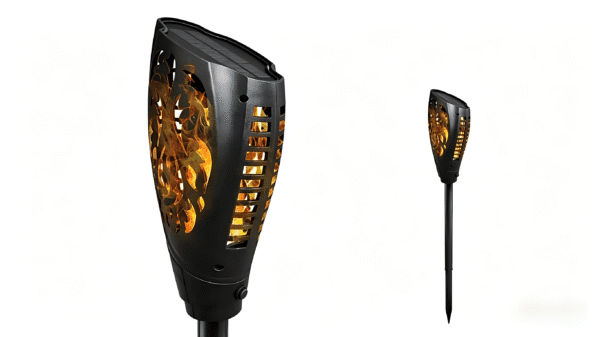

For a warm-looking decorative lamp, compare 2700 K and 3000 K first. For reading or desk work, compare 4000 K if warm white looks too yellow. LED light color temperature describes how warm or cool the light looks. Brightness, color rendering and the lampshade determine other parts of the result.
That distinction applies across LED table, clip-on and floor lamps. Start with the appearance you want, then check the finished lamp’s output, shade and controls before choosing a model.
What does CCT mean in LED lighting?
CCT means correlated color temperature. It describes the appearance of white light by comparing it with the color of an ideal heated object, called a blackbody. The matching temperature is expressed in kelvins, using the symbol K.
A lower value looks warmer, with more yellow or amber in its appearance. A higher value looks cooler or more bluish. The LED itself does not operate at the thousands of kelvins printed on its specification sheet.
“Correlated” is useful here because LEDs produce white light differently from a glowing filament. Different combinations of wavelengths can create a similar white appearance. Two lamps marked 3000 K can therefore have different spectra and render the same fabric differently.
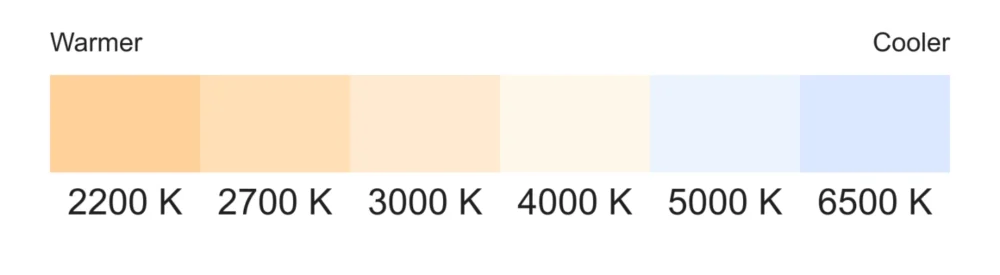
LED color temperature chart from warm white to daylight
Use this Kelvin color temperature chart to shortlist a white-light appearance. Names such as soft white and cool white vary between brands.
| Color temperature | Approximate appearance | Where to start comparing |
|---|---|---|
| 2200 K | Very warm, amber-toned white | Decorative evening lighting |
| 2700 K | Warm, yellowish white | Bedside tables and relaxed seating areas |
| 3000 K | Warm white with less yellow than 2700 K | Living-room lamps and warm task lighting |
| 4000 K | More neutral-looking white | Desk work and reading where warmer light looks too yellow |
| 5000 K | Cooler, daylight-like white | Task areas where a cooler appearance is preferred |
| 6500 K | Cool, bluish white | A deliberately cool setting to compare with warmer options |
How different are 2700 K, 3000 K and 4000 K?
In a 2700 K vs 3000 K comparison, both lights look warm, with 3000 K appearing less yellow. Moving from 3000 K to 4000 K creates a more noticeable shift toward neutral white. Compare them against the same white wall or fabric, with the room’s other lights on. That shows whether the new lamp blends with the space or stands out.
Are soft white and warm white the same?
The labels can overlap. Both often describe the warm end of the scale, so check the stated Kelvin value when comparing products. “Daylight” is another appearance label; it does not mean a lamp reproduces the full spectrum of daylight. Choose by the numerical specification and the actual lamp together.
How do you choose color temperature for a lamp?
Choose according to the job the lamp will do and the light already around it. A single room can contain a decorative glow, a reading light and daylight from a window; those sources do different work.
Table lamps and decorative floor lamps
Start with 2700 K or 3000 K when you want a warm appearance beside a sofa, bed or occasional table. Check the illuminated shade as well as the pool of light below it. Opaque metal, translucent fabric and tinted glass can produce different effects with the same LED module.
For example, iLEDGlow’s glass mushroom table lamp lists a fixed 2700 K setting and three-step brightness adjustment. It illustrates a practical combination: one warm white appearance with several output levels. Evaluate its decorative effect and brightness in the intended position.
Clip-on lamps and reading floor lamps
For task lighting, first make the page or work surface easy to see. Then compare the available white-light settings at similar useful brightness. Increasing the Kelvin value will not correct a beam that misses half the book.
For reading floor lamps, check the head position from the chair. Keep the light on the task and the bright source out of your direct view. A lamp used for both afternoon work and evening reading can benefit from separate color and brightness controls.
Set a comfortable bedside reading brightness before choosing a color mode. Small print and a broad open book can need different output or positioning.
Outdoor decorative lighting
For a patio table or seating area, compare warm options with the nearby indoor lighting visible through doors or windows. Judge the effect after dark, when the outdoor lamp will actually be used.
Also check the model’s outdoor-use rating and placement requirements. The IP54 vs IP65 comparison explains protection levels for portable table lamps. Color temperature alone cannot establish outdoor suitability.
How are color temperature, brightness and CRI different?
CCT describes the white-light appearance, lumens describe output, and CRI describes color fidelity. A higher Kelvin value gives you a cooler-looking white, not a guaranteed increase in brightness or better-looking colors.
Color temperature vs brightness
Lumens describe visible light output; watts describe electrical power. When comparing lamps, look at the listed output and where that light goes. A broad glowing shade and a directed reading head can distribute the same total output very differently.
Lux describes light arriving at a surface. A desk lamp can deliver more light to a page when moved closer, without changing its CCT setting. Adjust the position and brightness before deciding that the white-light color is the problem.

Check color rendering separately
CRI describes color fidelity relative to a reference source at the same CCT. Its usual Ra value averages eight test colors; R9 is a separate score for saturated red.
If a lamp will illuminate colored fabrics, crafts or merchandise, compare those materials under the candidate lights and review the available color-rendering data. A cool-white label does not establish accurate colors, and a warm-white label does not establish poor ones. Ask for the exact model’s figures rather than applying a category-wide claim.
Why can two 3000 K lamps look different?
The Kelvin number leaves out tint. Two lights with a similar CCT can appear slightly different in the green-to-pink direction. A specification called Duv describes this departure from the blackbody reference.
Compare samples side by side against the same white surface. If lamps will sit together in a product display or installation, ask the supplier how their color consistency is specified. A shared “3000 K” label alone does not define an acceptable match.
Should you choose fixed or adjustable color temperature?
Choose fixed CCT when one white-light appearance suits the product’s purpose. Choose selectable or tunable white when changing that appearance solves a real use need. Check how brightness behaves alongside color selection.
| Lamp feature | What the user can change | What to confirm |
|---|---|---|
| Fixed CCT | One stated white-light appearance | Whether brightness is adjustable |
| Selectable CCT | A set of preset white-light settings | Available settings and switch operation |
| Tunable white | White-light appearance within a supported range | Range and independence from brightness |
| Dim-to-warm | Light becomes warmer as it dims | The linked color-and-brightness behavior |
What do preset color modes provide?
Preset modes offer repeatable choices without a continuous color adjustment. iLEDGlow’s compact button-control book light lists 3000 K, 4500 K and 6000 K settings alongside stepless brightness adjustment. A user can choose among three white-light settings, then adjust the output for the task.
Check whether users can adjust brightness without cycling through every color mode. A reader who has chosen warm white should be able to change the output without repeatedly losing that setting.
Does dimming change color temperature?
Dimming a fixed-white LED normally reduces output while its nominal CCT stays approximately the same. Dim-to-warm products are designed to link reduced output with a warmer appearance. Tunable-white products provide a different way to adjust white light.
Test a sample through its full control sequence. With touch-controlled table lamps, a tap and a hold can perform different functions. Confirm which gesture selects color, which changes brightness and what setting returns after power-off.
How can you compare lamp colors before buying?
Compare samples where and when they will be used. Bring a white card and relevant materials, such as a book, fabric or wood sample.
- Use the intended shade. Check the complete lamp, including its diffuser or glass.
- Keep placement consistent. Compare at the same height and distance from the surface.
- Match useful brightness. Adjust output to a similar level on the task. A lux meter can help with repeatability.
- Check the surrounding light. Compare with nearby fixtures on, then with them off.
- Inspect from the user’s position. Read from the chair or look across the table, including any glare.
Record the preferred setting and the conditions. Phone photographs are useful notes, but automatic white balance and exposure can disguise differences; a photo alone cannot verify CCT. If an order requires measured CCT or color consistency, request the relevant test data.
What should a lamp brand specify before ordering?
Record the approved lamp model, shade, CCT settings and brightness controls together. “Warm and dimmable” does not tell a factory whether you want fixed 2700 K, three white-light modes or a warmer appearance as the lamp dims.
For a collection, also decide whether lamps displayed together need matching light color. Keep an approved sample for future comparisons.
For a custom LED lamp inquiry, send the intended use, preferred white-light settings and required control sequence so the available configuration can be reviewed.