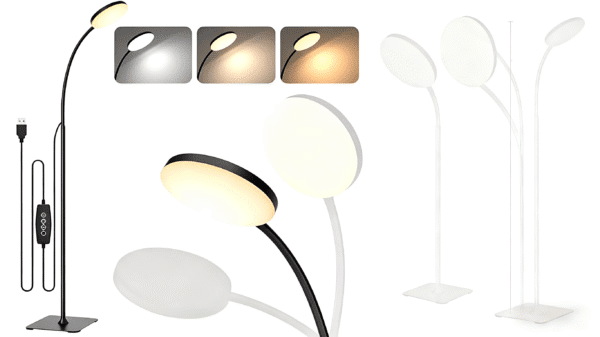

Yes — for more plants than you’d think, if the light is bright enough, close enough, and on long enough. The honest answer isn’t “works or doesn’t.” It’s “which plant, and how you aim the light.” Here’s how to tell which case you’re in.
Every indoor gardener hits this moment. Your pothos is getting pale, your basil keeps reaching for the window, and there’s a perfectly good LED lamp sitting on your desk. Before you buy anything, it’s worth knowing the truth: a normal light bulb is not a dead end for plants — it’s just that some plants are happy under it and others aren’t. Which side your plant is on decides everything.
Here’s the honest two-sentence version. For low-light houseplants, ordinary bulbs genuinely provide the light they need — extension services say so plainly. For anything that wants to flower, fruit, or grow fast from seed, a normal bulb runs out of steam, and that’s when a grow light earns its place.
Can a regular light bulb grow plants?
Yes for a lot of plants — and this isn’t a marketing trick. Plants mainly use the blue and red parts of the spectrum, and they reflect most of the yellow-green light (that’s why leaves look green). A white LED bulb puts out a broad mix of light that includes blue and red wavelengths, so a houseplant under it is getting genuinely usable light.
Kansas State University Extension makes the point directly: grow light bulbs are not a requirement for houseplants — ordinary cool- and warm-light bulbs provide the needed wavelengths. The one “normal bulb” that genuinely won’t do the job is the old incandescent kind, which gives off the wrong light and far too much heat.
If normal bulbs work, why do grow lights exist?
Fair question, and the honest answer is that a grow light is not a different kind of light — it’s a normal light built for the specific job. Three differences matter:
- Spectrum tuned to plants. The wavelengths plants lean on most are roughly 440 nm blue, 660 nm red, and 730 nm far-red. As Nebraska Extension notes, these are important for photosynthesis and growth — and as Kansas State adds, general-purpose LEDs usually aren’t engineered to emphasize them the way a grow light is.
- Light delivered to the leaf, not the room. A household bulb is designed to light a room. Grow lights concentrate usable light down onto a plant and are built to sit close without overheating. That proximity is where most of the real difference lives.
- Built to run on a schedule. Many grow lights have built-in timers and dimming so you can run them 14+ hours a day without remembering to switch them on and off.
So the useful question isn’t “is a normal LED enough light for plants?” It’s “is it enough for this plant, aimed this way?”
Do you need a “purple” grow light — or is white fine?
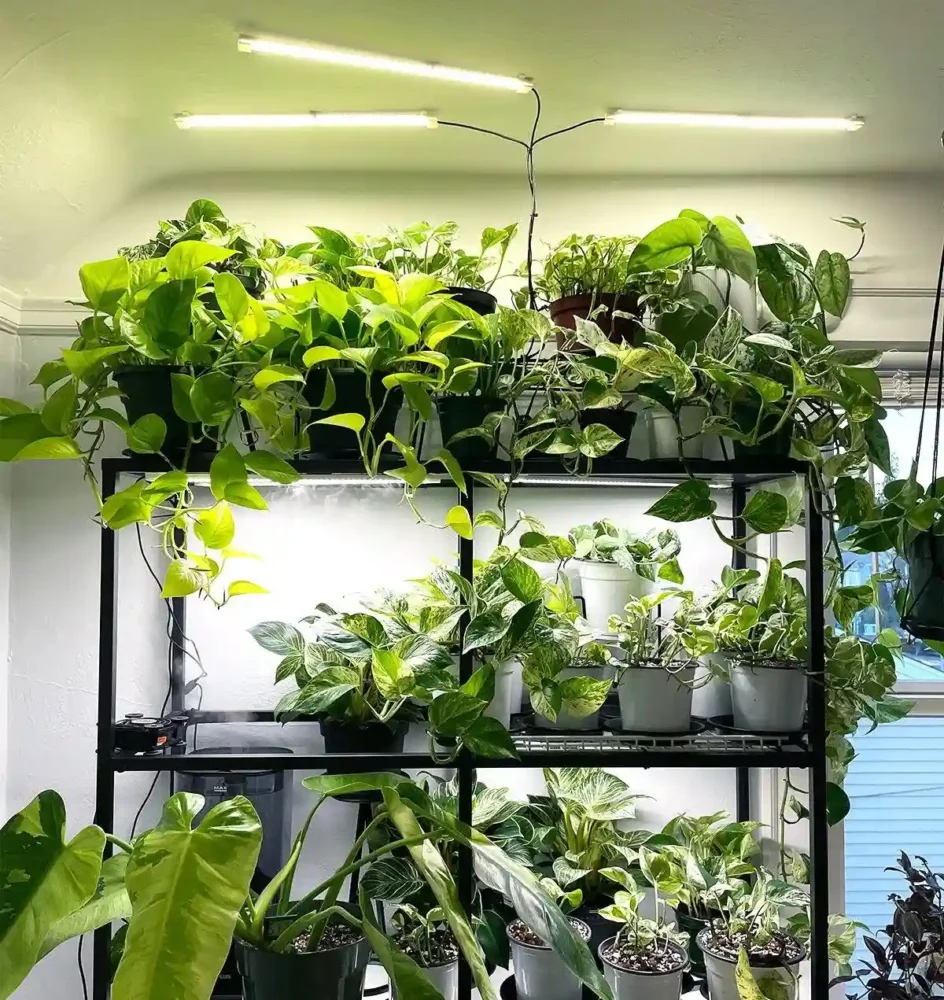
This one trips up a lot of shoppers. Pinkish-purple grow lights are simply red-and-blue LEDs with the green taken out — that’s the color you get when you remove the wavelengths that make light look white. They work, but they’re not the only thing that works, and you don’t need purple light to grow plants. As Nebraska Extension puts it, some grow-light fixtures give off that pink-purple light while others give off warm or cool white that looks like normal home lighting — and still provide the spectrum plants need.
So when you see a purple grow light next to a normal white bulb, the real difference isn’t “plant light vs. fake light.” It’s how much of the output is tuned to the red and blue plants actually use, and how much intensity reaches the leaves. For low-light houseplants, a good white bulb is genuinely enough. For demanding crops, the tuned red-and-blue light just does more work per watt.
Which plants grow fine under a normal LED light?
Broadly, the plants that don’t demand intense light — the ones happy near a north-facing window. Most foliage houseplants are genuinely fine under ordinary white light; as Nebraska Extension puts it, foliage plants grow well on a cooler, whiter light spectrum.
- Pothos and philodendron
- Snake plant and ZZ plant
- Spider plant and Chinese evergreen
These plants tolerate lower light by nature, so a normal LED kept reasonably close will keep them healthy and slowly growing. Herbs and leafy greens can also do fine if the light is bright and close — more on that below.
Which plants will a normal LED light not be enough for?
The honest other side of the list — plants that will stretch, pale out, or simply stall no matter how you position a household bulb:
- Blooming and fruiting plants. Flowers and fruit lean hard on higher red light. Nebraska Extension notes that plants needing to bloom want a light with more red than a typical white or cool light provides.
- Succulents and cacti. Sun-lovers by nature; under a weak household bulb they stretch and lose their shape.
- Fast, dependable seed starting. Seedlings will grow under a normal bulb that’s close enough, but they’re quick to stretch if it isn’t — which is why serious starts usually get a real grow light.
If your plant fits this group, no amount of lamp positioning fixes it. That’s not you doing something wrong — the plant genuinely wants more than a general-purpose bulb delivers.
Can you start seeds under a normal LED?
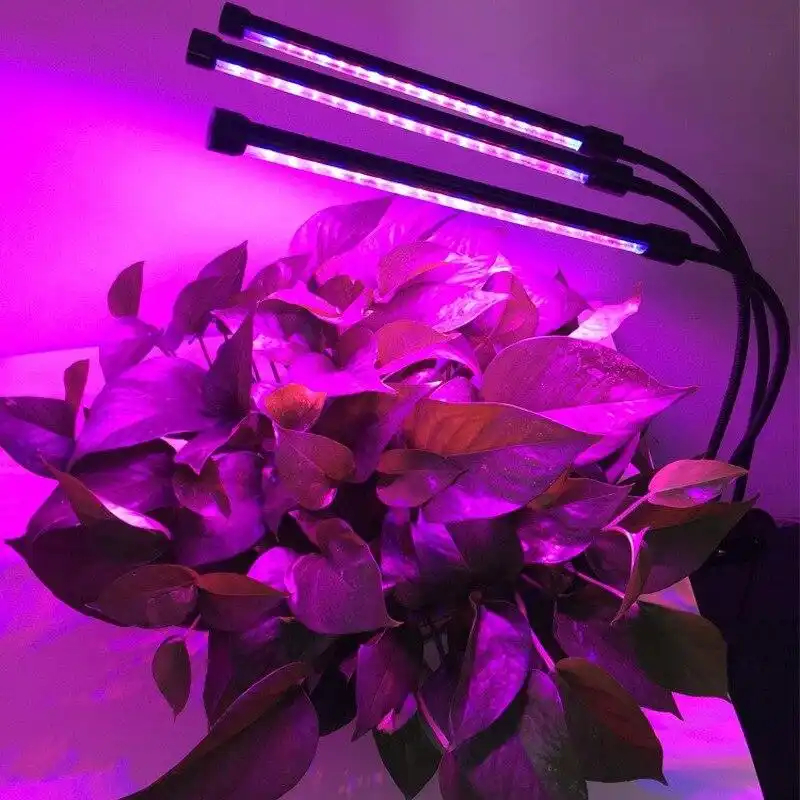
Yes, with real conditions attached. A bright household LED, kept just a few inches above the soil, running 14–16 hours a day, will grow many seedlings — people do it every day. Seedlings want light close and for a full day, and they’re the fastest to tell you when they’re not getting it: stretch tall and pale and they’re reaching.
That’s why the practical advice for seed starting is a light you can hang inches above the tray and raise as they grow. The how many hours to run grow lights and how far to hang them guides cover the specifics — the same rules apply whether the light is a normal bulb or a grow light, with one difference: a dedicated grow light makes hitting those rules much easier.
How do you make a normal LED work better before buying anything?
Three free levers fix most “my normal light isn’t doing enough” situations. They’re not guesswork — they’re the numbers extension services actually recommend:
- Get the light close. Kansas State recommends houseplants sit 6–12 inches from the light source, because intensity drops quickly with distance. Nebraska Extension puts seedlings even closer, 3–6 inches above the leaves.
- Run it long enough. Kansas State’s guidance: lights on about 16–18 hours a day if the plant gets no window light, and 12–14 hours if it gets some. Most plants want a real dark period at night.
- Use it to supplement a bright window, not replace it. A normal LED paired with daylight does more than one trying to light a dark corner alone.
The plant will tell you if you’re on track: stretching, pale stems mean not enough light is reaching it; leaves looking bleached or crispy at the tips mean too much. Within a few days of a change, it shows you which way to go.
When is a grow light actually worth it?
It’s worth it the moment the plant’s needs outgrow what a normal bulb can deliver, which usually looks like one of these: you want flowers or fruit, you’re growing succulents or cacti, you’re starting more than a tray of seeds, or you’re keeping sun-loving plants in a room with little daylight. In those cases, no amount of “closer and longer” on a household bulb closes the gap.
Here’s the part most guides skip, because it’s not the upgrade that sells a whole new light. If your lamp takes a standard E26 screw-in bulb, you can usually keep the lamp and just swap in a grow light bulb. Same socket, same lamp — the grow bulb adds more red spectrum and more usable intensity than a standard household bulb delivers, which is exactly the gap for plants that want to flower or grow faster.
(And if fluorescent tubes are the light you’re wondering about instead — that’s a separate question. Shop fluorescents genuinely grow seedlings and leafy greens, they just run out of steam earlier than LED.)