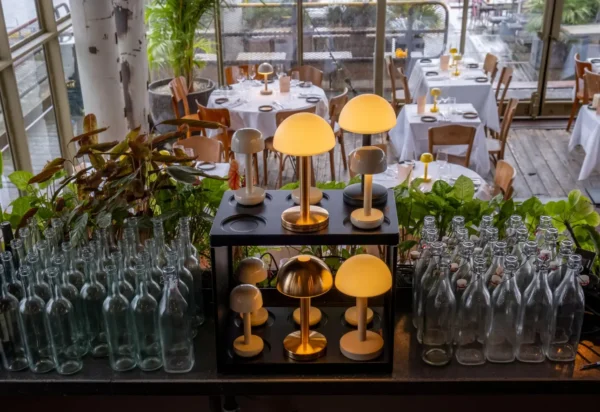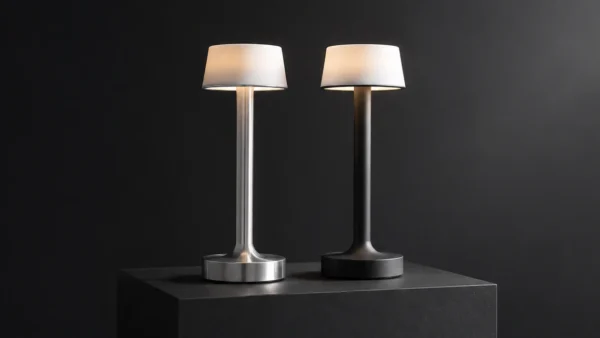

A restaurant terrace faces very different challenges from an indoor dining room. Lamps are left outside overnight, cleaned after busy service hours, touched frequently by staff, and exposed to changing weather. Outdoor seating is often a restaurant’s most valuable space — and the hardest on its lamps.
Many buyers assume the highest IP rating is the safest choice. In reality, buying a higher IP rating does not automatically mean better performance. The right protection level matches your environment — not the highest number on the spec sheet.
This guide focuses on cordless table lamps for commercial outdoor dining, where weather protection and daily operation both matter. You will learn what IP54 and IP65 protect against, when one is enough, and what to check beyond the IP number for outdoor durability.
IP54 vs IP65: What’s the Difference for Outdoor Table Lamps?
The difference between IP54 and IP65 is not about picking a higher number. It is about what your outdoor space exposes a lamp to every day.
An IP rating is a two-digit code: the first digit covers dust, the second covers water. For outdoor table lamps, the second digit usually gets the most attention, because water exposure is often the biggest concern. Both numbers matter for long-term outdoor performance.
- IP54 — the “4” means it resists splashing water from any direction. Think of a drink spilled nearby, light rain, or a damp cloth.
- IP65 — the “5” means it can handle low-pressure water jets. Think of occasional low-pressure water spray during cleaning or weather exposure — not high-pressure cleaning equipment.
| Rating | Dust protection | Water protection | Typical fit |
|---|---|---|---|
| IP54 | Resists harmful dust build-up | Splashing water from any direction | Covered patios, light rain, occasional spills |
| IP65 | Dust-tight | Low-pressure water jets | Fully exposed outdoor areas, coastal spaces, occasional cleaning spray |
In plain terms: IP54 handles splashes, light rain, and a damp cloth — the water a patio lamp usually meets. IP65 adds a steady spray. Neither covers submersion.
An IP rating tells you how well water and dust are blocked. It does not tell you how the lamp handles sunlight, salt air, temperature changes, or years of commercial use. This is the difference between choosing a specification and choosing a lamp that can handle real commercial use.
When Is IP54 Waterproofing Enough for Outdoor Dining?
A covered patio is a very different environment from an open rooftop. Most lamps there only meet splashes, light rain, or the occasional spilled drink.
- Covered patios and terraces under a pergola or awning
- Spaces that get light rain, morning dew, or the occasional spilled drink
- Outdoor areas protected by umbrellas during service
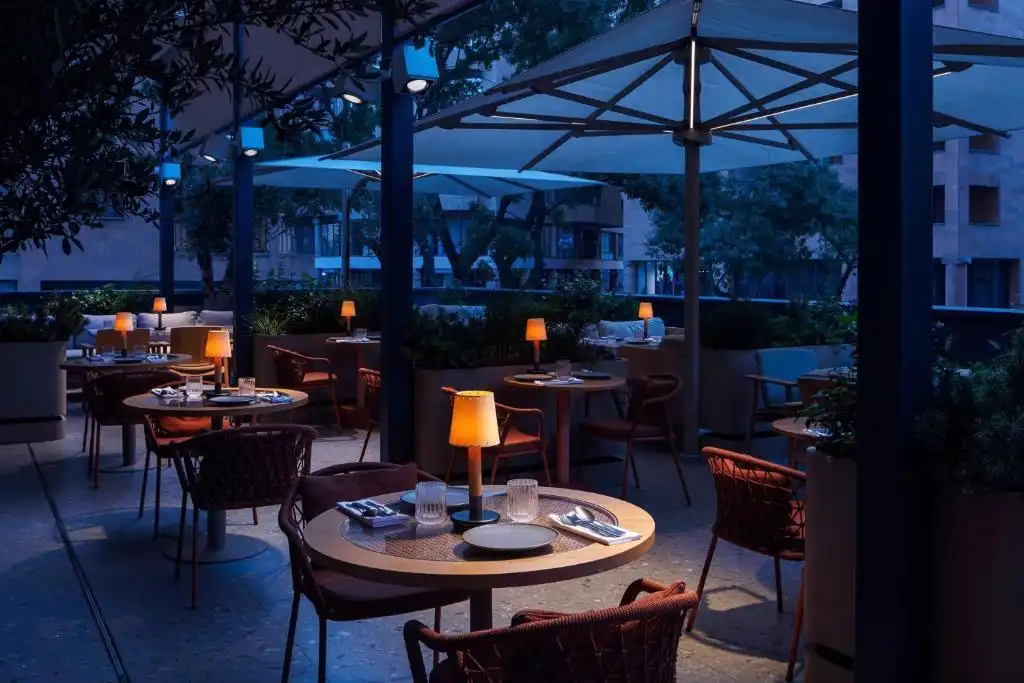
Choosing IP54 can also be a practical decision from a cost perspective. When the environment does not require higher protection, paying for additional sealing may not create meaningful value. The best choice is not always the highest IP rating. It is the protection level that matches your environment. Many hotel and restaurant patios are covered or semi-protected. For those, IP54 usually does the job — paying more for IP65 does not automatically make the lamp last longer.
For most covered outdoor dining areas, IP54 is already a practical and reliable choice.
When Do Outdoor Table Lamps Really Need IP65?
Some spaces genuinely need IP65. If your lamps stay outdoors overnight and face rain, wind, or frequent cleaning, IP65 is usually the safer choice.
- Fully exposed rooftops
- Coastal areas, where wind-driven rain and salt air arrive together
- Uncovered spaces in rainy climates with sustained downpours
One misconception is worth correcting here. IP65 protects against low-pressure water jets, but it does not mean the lamp is designed for high-pressure cleaning equipment. For daily maintenance, remove the lamp before washing tables or outdoor areas whenever possible. This simple maintenance habit can often extend the service life of outdoor lamps more effectively than choosing a higher IP rating alone.
| Your outdoor setup | Usually enough |
|---|---|
| Covered patio, light rain, occasional spills | IP54 |
| Fully exposed rooftop or rainy climate | IP65 |
| Coastal area with salt air and wind | IP65, plus a corrosion-resistant housing |
| Tables washed down with a hose or washer | IP65 — and remove the lamp before cleaning |
Expect IP65 to cost more. Higher protection levels also need careful design around heat management and battery performance. That is why a higher IP rating does not automatically mean a better waterproof cordless lamp.
IP65 makes more sense when replacement costs and maintenance are more expensive than the initial product price.
Beyond the IP Rating: Material, Sealing, and Charging Design
Two lamps can both be rated IP54, but their real-world durability can be completely different.
Material. The key factor is not simply plastic versus metal, but whether the material is designed for long-term commercial use. Aluminum alloy housings with proper surface treatment usually provide better durability, and metal finishes create a more premium appearance that matches upscale restaurants, hotels, and event spaces. The finish and sealing materials around joints also affect long-term outdoor performance.
A waterproof rating protects the inside of the lamp. Material quality determines how long the outside survives.
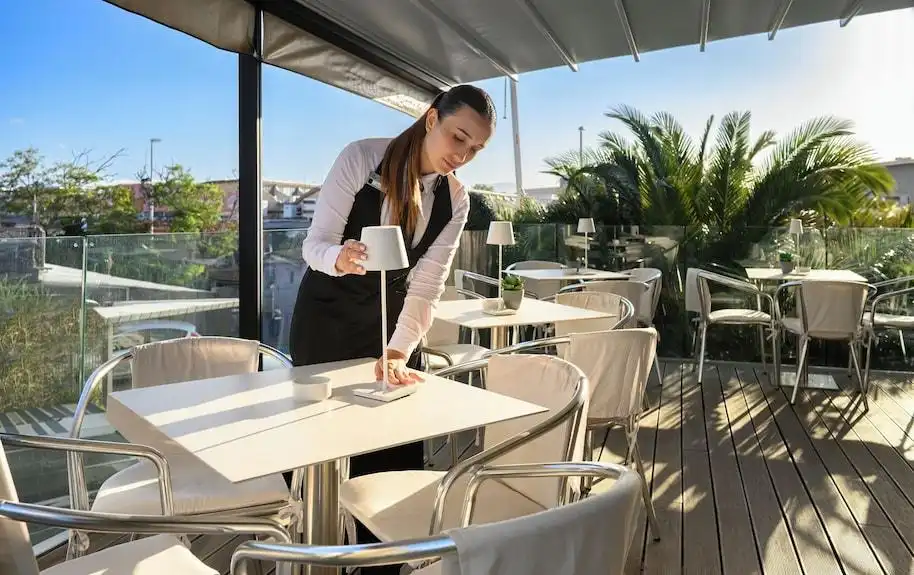
Sealing. Water usually gets in through seams — the charging port, the buttons, the battery cover — not the housing itself. How those openings are sealed can matter more than the number on the label.
Charging design. Some commercial outdoor rechargeable table lamps use contact-charging bases to keep the charging port away from direct exposure. This design is especially useful for restaurants and hotels that recharge multiple lamps every day. It also simplifies daily operations for staff, especially during busy service periods. That is not a statement against USB-C — many well-made commercial lamps use it. It simply means that fewer exposed openings is generally better outdoors.
The number tells you the test the lamp passed; the design tells you whether it will last.
Choose the Protection Your Space Actually Needs
The goal is not the highest IP number. It is the lowest operating risk for your specific outdoor space.
Covered patio and light exposure? IP54 usually does it. Fully exposed or coastal? IP65 — and still remove the lamp before hosing down. Check the sealing, the material, and the warranty: the number is only the beginning.
The best outdoor lamp is not the one with the highest specification. It is the one designed for your actual operating environment.