
Struggling to figure out what is the best grow light for indoor plants in your home?
Maybe your monstera looks leggy, your herbs collapse every winter, or that north-facing window just isn’t cutting it. You’re not alone—most homes simply don’t provide enough consistent light for healthy, compact growth.
The good news? The right full spectrum LED grow light can completely transform your plants:
thicker foliage, stronger roots, better color, and year-round growth… without turning your living room into a purple sci‑fi lab.
In this guide, you’ll learn exactly which grow lights actually work for houseplants, how to compare LED vs. other plant lights, what PAR, PPFD, and wattage really mean for your setup, and how to choose a light that’s energy efficient, decor-friendly, and tailored to your plant collection.
You’ll also see why modern options like iLEDGLOW full spectrum grow lights are becoming the go-to choice for serious indoor plant lovers.
Let’s dive into the lights that will finally make your indoor jungle thrive.
Why Indoor Plants Need Grow Lights
Indoor plants survive on windowsills, but they thrive under the right grow light. Natural light indoors is usually too weak, too short, or too inconsistent—especially in winter or apartments with small windows. That’s where a grow light for indoor plants becomes essential, not optional.
Signs Your Indoor Plants Aren’t Getting Enough Light
If you’re seeing any of these, your plants are basically begging for a grow light:
| Warning Sign | What It Means |
|---|---|
| Long, stretched stems (leggy growth) | Plant is stretching toward any light source |
| Small, pale, or yellowing leaves | Not enough energy for healthy foliage |
| Slow or no new growth | Light levels are below survival mode |
| Leaning toward windows | Plant is chasing light all day |
| Soil staying wet for too long | Low light = low water use, risk of root rot |
When I see two or more of these in my own collection, I know it’s time to add LED grow lights for indoor plants immediately.
Why Window Light Isn’t Always Enough
Even a “bright” room often isn’t bright enough for most houseplants:
- Glass blocks part of the light spectrum plants use.
- Light intensity drops sharply just a few feet from the window.
- North-facing and shaded windows are low light most of the year.
- Short winter days mean not enough hours of usable light.
So while windows help, they’re usually just supplemental lighting for houseplants, not a full solution—especially for light-hungry plants like herbs, succulents, and flowering varieties.
Benefits of Grow Lights Year-Round
Using a full spectrum grow light year-round keeps plants consistent, not stressed. The payoff is huge:
| Benefit | What You’ll Notice |
|---|---|
| Stronger, fuller growth | Compact plants, no leggy stems |
| Better color & variegation | Brighter variegated leaves, deeper greens |
| Healthier roots & fewer diseases | Less rot, fewer fungus issues |
| Reliable herbs & veggies indoors | Basil, mint, lettuce thriving in kitchens |
| Plants survive winter easily | No more seasonal die-back or leaf drop |
That’s why I design and use energy efficient plant lights as a core part of indoor plant care, not a luxury. A good LED grow light for indoor plants makes the difference between “keeping plants alive” and having a genuinely thriving indoor jungle.
Grow Light Basics for Indoor Plants
When you’re choosing the best grow light for indoor plants, you don’t need a science degree—you just need a few basics locked in. Here’s the simple version that actually helps you buy and use the right LED grow lights for houseplants.
Simple grow light terms you actually need to know
Skip the jargon, focus on these:
- Wattage (W) – Power used, not brightness. Modern LED grow lights use less watts but give stronger light.
- Lumens – How bright the light looks to our eyes (not perfect for plants, but useful for comparison).
- PAR – Light in the range plants actually use for photosynthesis (400–700 nm).
- PPFD – How much useful light hits a specific area (measured in µmol/m²/s). Higher PPFD = stronger light for your plants.
- Full spectrum grow lights – LED grow lights that mimic natural daylight, ideal for most indoor plants.
If you want a simple, ready-to-use option, our gooseneck indoor plant grow lights with adjustable heads are an easy way to get proper PAR and coverage without overthinking setup: flexible gooseneck grow lights for indoor plants.
How light spectrum affects plant growth
Plants don’t just need “bright” light; they need the right colors:
- Blue light (around 400–500 nm)
- Supports leaf growth, compact shape, and healthy seedlings.
- Great for foliage plants, herbs, and young plants.
- Red light (around 600–700 nm)
- Boosts flowering, fruiting, and overall energy use.
- Important for flowering houseplants and fruiting indoor crops.
- Full spectrum white LEDs
- Combine red, blue, and other wavelengths.
- Look like normal white light in your home (no harsh purple glow).
- Best balance for everyday indoor plant lighting and winter indoor plant care.
For most homes, full spectrum LED grow lights for indoor plants are the safest, most versatile choice.
How long to run grow lights for indoor plants each day
Most houseplants don’t want 24/7 light. They need a day–night rhythm:
- Low to medium light plants (ZZ, pothos, snake plant)
- 8–10 hours of grow light per day.
- Medium to bright light plants (philodendron, monstera, most foliage)
- 10–12 hours per day.
- High light plants (succulents, cacti, herbs, compact veggies)
- 12–14 hours per day.
Use a timer so your plants get a consistent schedule and you don’t have to think about it daily. Most of our indoor plant grow lights support timer functions and dimming so you can easily dial in the right duration and intensity: indoor LED grow lights for houseplants.
How far should grow lights be from indoor plants
Distance matters as much as duration. Too close burns leaves; too far gives weak, stretched growth.
Use this as a simple starting point for LED grow lights:
- High-power LED panels / bars
- Keep about 12–24 in (30–60 cm) above plant tops.
- Clip on grow lights / gooseneck grow lights / screw-in bulbs
- Usually 6–18 in (15–45 cm) from the leaves.
- Seedlings and delicate plants
- Start higher, then slowly move lights closer over a week.
Quick rule:
- If leaves look pale, bleached, or crunchy → light is too close or too strong.
- If plants stretch, lean, or grow thin, weak stems → light is too far or too weak.
Dial in spectrum + time + distance, and even “low light houseplants” will grow stronger, greener, and more compact under the right grow LED lights for indoor plants.
Types of Grow Lights for Indoor Plants
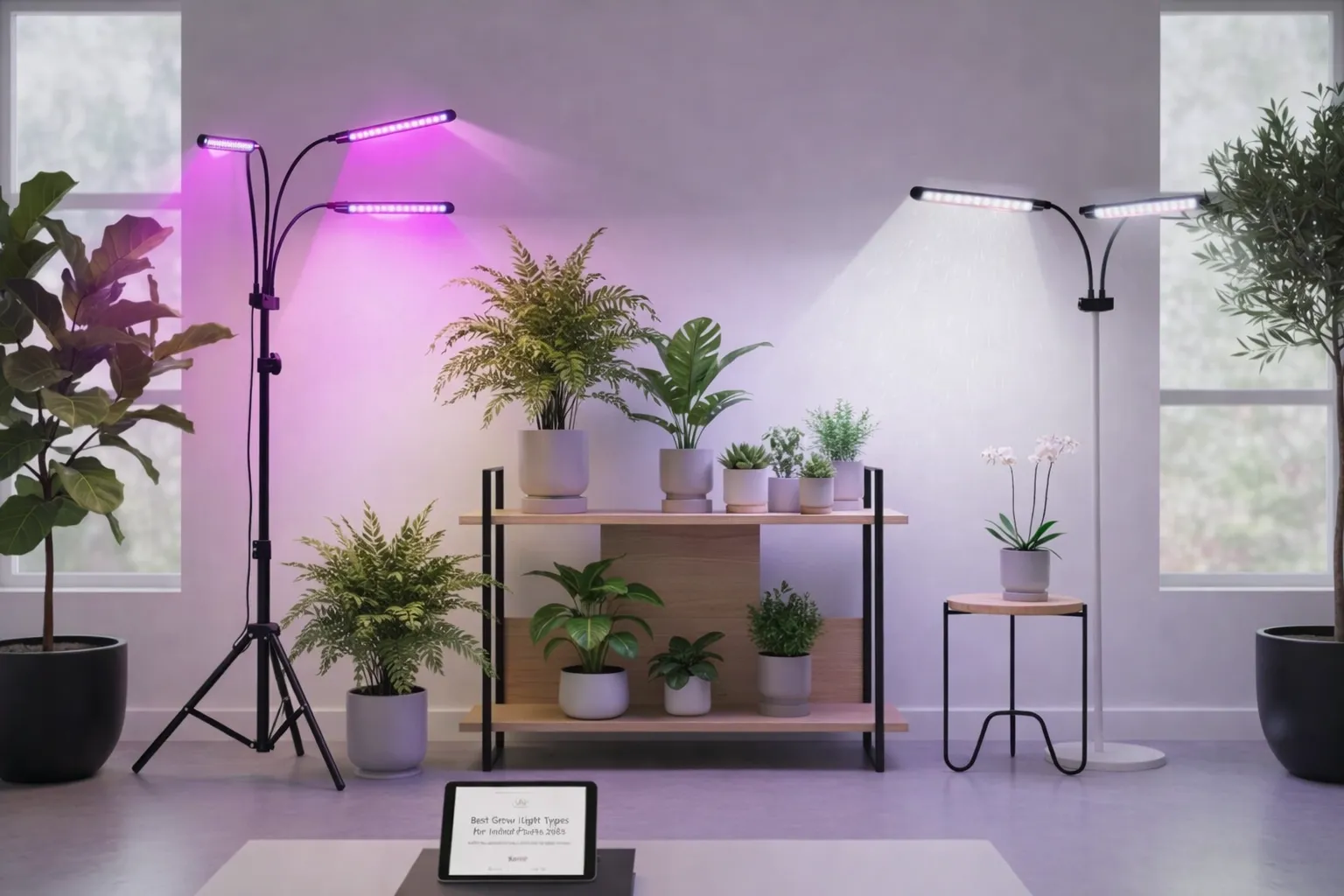
When people ask “what is the best grow light for indoor plants”, they’re usually comparing four main types. Here’s the short, no-nonsense breakdown.
LED grow lights for indoor plants
LED grow lights for indoor plants are the clear winner in 2026:
- Full spectrum options that mimic daylight for better growth and color
- Energy efficient plant lights – low power draw, high output (great PAR and PPFD)
- Very low heat, so they’re safer over desks, couches, and in small apartments
- Long lifespan, often 50,000+ hours, so you replace them far less often
Modern full spectrum LED grow lights also look good: slim bars, panels, and floor lamps that blend into your space instead of making your living room look like a lab.
Fluorescent grow lights for houseplants
Fluorescent grow lights (T5/T8 tubes and CFL bulbs) still work, and they’re fine if:
- You’re starting out on a tight budget
- You’re growing low to medium light plants (ferns, pothos, philodendron)
- You don’t mind bulkier fixtures
They’re weaker and less efficient than good LEDs, and tubes need replacing more often, but they’re still a decent low light houseplant solution if your expectations are realistic.
Why incandescent and HID grow lights are bad for homes
Incandescent bulbs and traditional HID (HPS/MH) grow lights are basically a no-go for home use:
- Waste tons of energy as heat – risky near leaves, ceilings, and kids
- Shorter life, higher power bills, poor PAR value compared to LEDs
- HID fixtures need ballasts, get extremely hot, and are overkill for a few houseplants
They made sense in old-school grow rooms, not in a modern apartment or living room.
Why LED is the best grow light for indoor plants in 2026
In 2026, LED is the best grow light for indoor plants, full stop:
- Highest light output per watt = strong growth with lower energy bills
- Tuned full spectrum grow lights that support everything from foliage plants to succulents
- Clean, modern designs that actually look good in your home
- Flexible form factors: bars, panels, clip-on grow lights, and stylish grow lamps
For larger or more advanced setups, I use the same LED tech we build into our high-efficiency greenhouse grow lights for consistent, pro-level performance indoors as well, similar to what you’d see in commercial greenhouse LED grow lights.
How to Choose the Best Grow Light for Indoor Plants
Match grow lights to plant type and light needs
Different plants = different light levels. Start here:
| Plant type | Light need | Suggested grow light setup |
|---|---|---|
| Low-light (ZZ, pothos, snake) | Low–medium PPFD | Basic LED grow bulbs, 8–10 hrs/day |
| Foliage plants (philodendron) | Medium PPFD | Full spectrum LED panels, 10–12 hrs/day |
| Succulents, cacti | High PPFD | Strong full spectrum LEDs, closer to plants |
| Herbs, veggies, seedlings | Medium–high PPFD | High-output full spectrum grow lights |
Focus on: actual brightness (PPFD/PAR) and not just watts.
Pick the right grow light size and setup
Think about your space first, not just the light.
- One shelf or small corner – clip-on or gooseneck LED grow lights for indoor plants
- Multiple plants / plant wall – bar lights or a full spectrum quantum board grow light
- Larger indoor garden – modular LED panels you can expand later
As a rule: the light should cover the whole leaf area, not just the pot.
Must‑have grow light features for indoor plants
Look for features that make daily use easy and efficient:
- Full spectrum white light (not just purple)
- Dimmable brightness – to match sensitive vs. high-light plants
- Timer function – 8/10/12/16 hr presets
- Adjustable arms or height – so you can control distance as plants grow
- High efficiency – more PAR per watt, lower power bills
Well‑designed fixtures like a gooseneck floor lamp grow light make it simple to dial in the perfect position for each plant.
Balancing cost, energy use, and long‑term value
Cheap lights can get expensive fast if they waste power or fail early.
| Factor | What to aim for |
|---|---|
| Power use | Efficient LEDs, low watts but high PAR output |
| Lifespan | 30,000–50,000+ hours rated |
| Flexibility | Dimmable, adjustable, modular |
| Warranty/support | Real support, not generic no‑name listings |
I focus on energy efficient plant lights that cost more upfront but pay off in lower energy use and longer life.
Grow lights that actually look good at home
If your plants live in your living room, the light has to look like decor, not lab gear.
- Choose sleek, minimal LED bars or floor lamp grow lights that blend with furniture
- Go for neutral white full spectrum so your space looks natural
- Hide cables, use slim stands, and match the fixture color to your room
A stylish option is a modern gooseneck grow light floor lamp that works both as a reading lamp and as supplemental lighting for houseplants, without making your home look like a greenhouse.
Best Grow Lights for Indoor Plants in 2026
When people ask “what is the best grow light for indoor plants,” I break it down by how you actually use your space. Here’s what works in 2026.
Best overall full spectrum LED grow light for indoor plants
For most homes, a dimmable full spectrum LED panel with high PAR/PPFD and low power draw is the best balance of growth, energy savings, and safety.
Look for:
- 3500–5000K white “full spectrum”
- Even light spread over your whole shelf or plant corner
- Built‑in dimmer (so you don’t fry low‑light plants)
- At least 30–40W actual draw per 2×2 ft growing area
A best full spectrum LED setup should keep foliage compact, colors rich, and growth steady year‑round without cooking your leaves.
Best screw-in grow light bulbs for plants
If you just want to upgrade a regular lamp, screw‑in grow light bulbs for indoor plants are the easiest move:
- Fit standard E26/E27 sockets
- 10–20W per bulb for small clusters of plants
- Full spectrum (avoid weak “plant” bulbs with low output)
Use them in clip‑on lamps, pendant fixtures, or floor lamps and you instantly get supplemental lighting for houseplants without a full grow setup.
Best grow lights for small spaces, herbs, and kitchen gardens
For apartments, desks, and kitchen counters, I like compact LED grow lights for indoor plants with built‑in stands or trays:
- Slim bar lights or mini panels over herbs and leafy greens
- Clip on grow lights that clamp to shelves or cabinets
- Tray kits with lights and timers for seedlings and microgreens
If you want a plug‑and‑play kitchen garden, a tray seedling kit with light and time control like this seedling kit with built‑in timer is ideal for basil, mint, and salad greens.
Best premium grow light for serious plant parents
If you’re running a real indoor jungle or high‑light plants, invest in a high PPFD, full spectrum LED grow lamp with strong build quality and precise control:
- Adjustable spectrum or multi‑channel dimming
- Timer integration and multiple brightness levels
- Solid heatsink and long‑life diodes
For display areas, a well‑designed LED floor light from a plant‑focused line (for example, the LED floor grow light category) gives you pro‑level output that still looks like home decor, not a warehouse.
Best budget grow lights and starter kits
If you’re just starting with grow lights for indoor plants and don’t want to overspend:
- Choose smaller LED grow lights for houseplants (20–40W panels or bars)
- Look for basic but solid features: full spectrum, decent PAR, no noisy fans
- Starter kits with stands or trays are great if you don’t want to DIY mounting
Budget doesn’t mean useless. A simple, energy efficient plant light with the right spectrum and enough brightness will give you way better results than relying on weak window light alone.
Why iLEDGLOW Is One of the Best Grow Lights for Indoor Plants
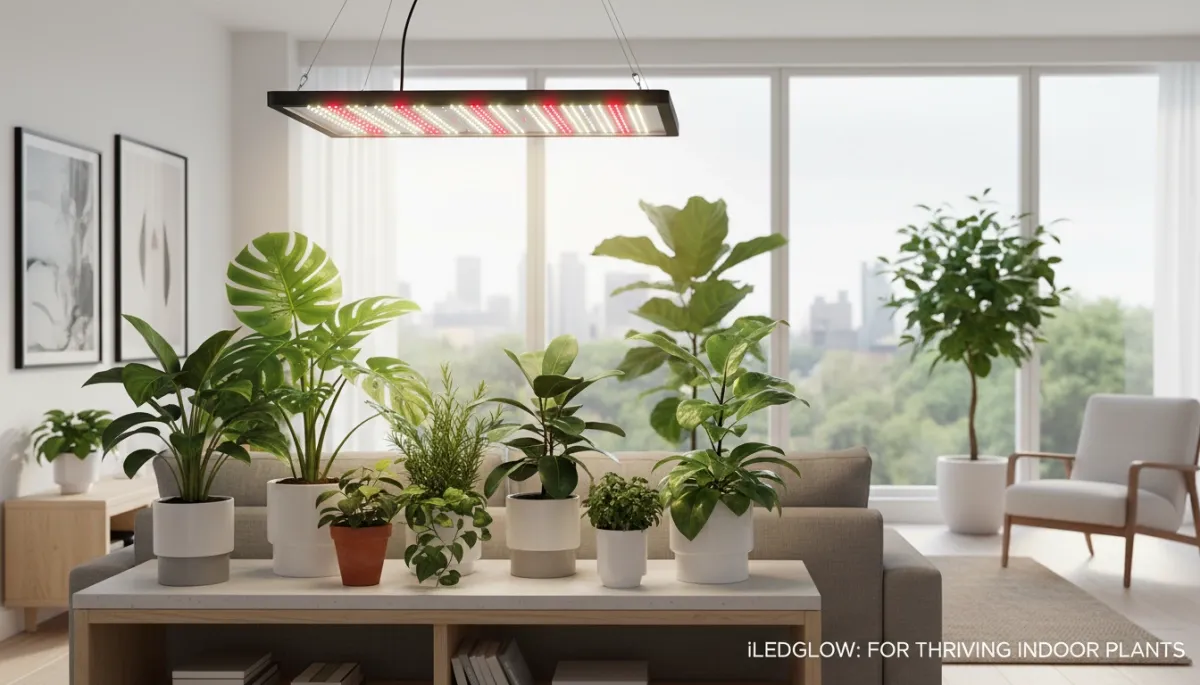
What makes iLEDGLOW different from other grow lights
Here’s what sets iLEDGLOW apart from typical LED grow lights for indoor plants:
- True full spectrum: Balanced white light with targeted red and blue peaks, so plants photosynthesize efficiently and colors look natural to your eyes. No harsh purple glow.
- High PPFD with low power use: You get strong PAR output where plants actually need it, but with energy‑efficient plant lights that won’t spike your electric bill.
- Even light spread: Lens design and diode layout reduce hot spots and weak corners, so every plant on the shelf gets usable light.
- Home‑friendly design: Slim, minimal, and clean. These look like modern light bars, not industrial warehouse fixtures.
We’ve built the same LED efficiency we use in our solar wall-mounted outdoor lights into a form that works indoors for houseplants.
Key iLEDGLOW features indoor plant owners care about
I focused iLEDGLOW around how people actually grow indoors:
- Full spectrum grow lights (3500–4000K): Ideal for foliage, flowering houseplants, herbs, and seedlings.
- Dimmable output: Dial intensity up for high‑light plants, down for low light houseplant solutions like pothos and ZZ.
- Cool, quiet operation: Passive or ultra‑quiet cooling, so no loud fans in your living room.
- Flexible mounting: Works with grow light stands, shelves, or ceiling hooks; easy to adjust height as plants grow.
- Long lifespan diodes: Fewer replacements, better long‑term value than cheap grow light bulbs for plants.
How iLEDGLOW works for houseplants and succulents
I tuned iLEDGLOW to be a “set it and forget it” option for most indoor plant lighting:
- Popular houseplants (monstera, philodendron, calathea)
- 12–14 hours/day at medium intensity
- Light placed 12–18 in (30–45 cm) above the canopy
- Result: Stronger stems, larger leaves, better color, fewer leggy vines.
- Succulents and cacti
- Higher intensity, 10–12 hours/day
- Light placed 8–12 in (20–30 cm) above plants
- Result: Compact growth, stronger color, less stretching, reduced rot risk in low‑sun rooms.
Because iLEDGLOW is a balanced full spectrum LED grow light for indoor plants, it works both as supplemental lighting for houseplants by a window and as a primary light source in darker corners of your home.
How to Set Up Grow Lights for Indoor Plants
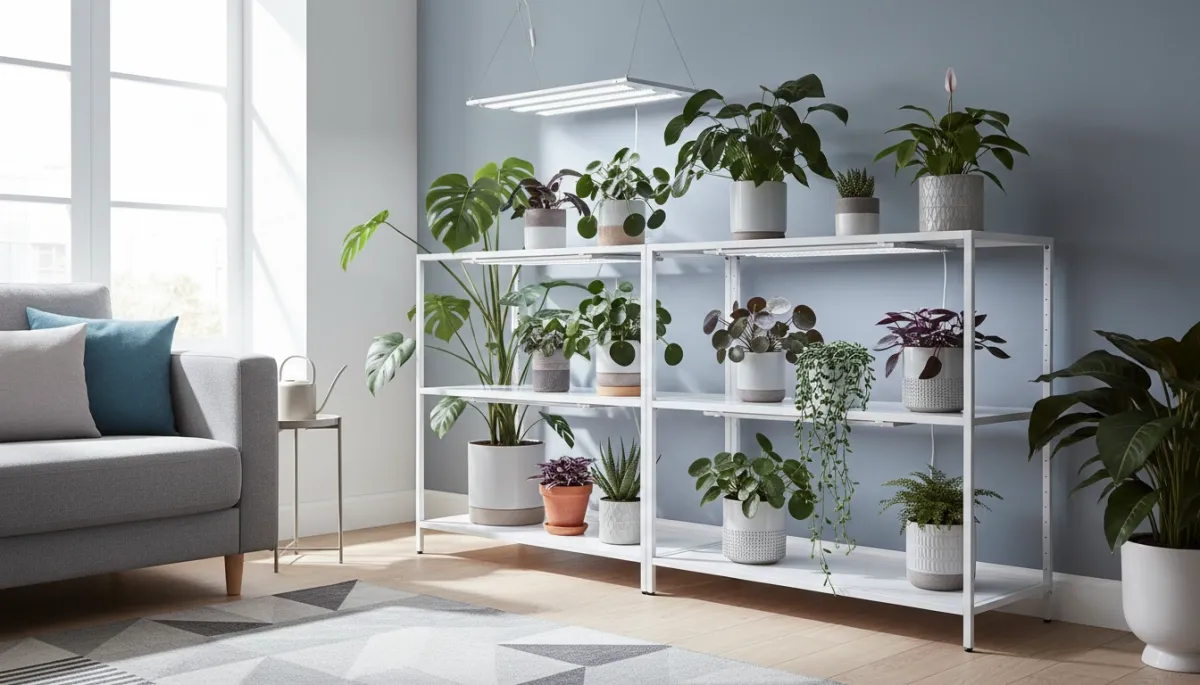
Setting up grow lights for indoor plants isn’t complicated, but placement and routine matter a lot if you want strong, compact growth instead of leggy, weak stems.
Where to Place Grow Lights for the Best Plant Growth
Use your grow lights to replace a bright window, not just decorate it.
- Distance from plants
- High‑light plants (succulents, cacti, herbs): keep LED grow lights about 8–12 in (20–30 cm) above the leaves.
- Medium/low‑light plants (philodendron, pothos, calathea): 12–18 in (30–45 cm) is usually enough.
- Angle and coverage
- Aim light straight down for best PPFD and even coverage.
- Avoid strong light from just one side, or plants will bend and stretch.
- Near windows but not relying on them
- North‑facing or shaded rooms: treat your grow light as the main light source.
- South‑facing windows: use LED grow lights for supplemental lighting for houseplants in winter or on cloudy days.
- Height checks
- If leaves bleach, curl, or get crispy: light is too close.
- If plants stretch toward the light: raise output or lower the fixture.
Clip-on grow lights and small grow light stands are perfect for shelves and desks, especially if you want targeted lighting without rewiring anything.
How to Use Timers and Light Cycles for Indoor Plants
Consistent light cycles matter more than obsessing over every watt.
- General daily schedule
- Most houseplants: 10–12 hours of light per day.
- High‑light herbs/veggies: 12–14 hours.
- Low‑light tropicals: 8–10 hours is enough if PPFD is decent.
- Use timers
- Plug your grow light into a simple outlet timer and set it once.
- Keep a steady 24-hour rhythm: for example, 8 AM–8 PM.
- Dark time is important
- Plants need at least 8 hours of darkness for healthy respiration.
- Don’t run grow lights 24/7; it stresses most indoor plants.
Common Grow Light Mistakes to Avoid with Houseplants
A good LED grow light setup can still fail if the basics are off. Avoid these:
- Too weak or too far away
- A single low‑watt bulb 3 feet above won’t cut it for most plants.
- Wrong spectrum
- Avoid outdated red blue spectrum lights that make your space harsh and unusable; a full spectrum grow light is better for plant health and your eyes.
- No adjustment as plants grow
- As plants get taller, raise the light so it stays the same distance from the top leaves.
- Ignoring heat
- Even LEDs can warm up small spaces; watch for wilting or dry soil.
- Skipping other basics
- Strong light without proper watering and nutrients still leads to weak growth.
Basic Grow Light Care and Maintenance
If you treat your grow lights like long-term tools instead of disposable gadgets, they’ll keep your plants happy for years.
- Clean the lenses and reflectors
- Wipe dust off LED panels and grow light bulbs for plants every 4–6 weeks.
- Dust and grime can easily cut effective output by 10–20%.
- Check connections and mounts
- Make sure clamps, hooks, and cords stay secure—especially with clip‑on fixtures similar to a button‑control clip light.
- Watch for flicker or dimming
- If LEDs flicker, overheat, or dim early, replace the driver or unit before it fails completely.
- Use rated fixtures only
- Stick to energy efficient plant lights with proper safety certifications and heat management, especially if they’ll run 12 hours a day.
Set your distance, lock in a timer schedule, keep the lenses clean, and your grow lights for indoor plants will do exactly what they’re supposed to do: keep your houseplants compact, healthy, and growing year‑round.
FAQ: Best Grow Lights for Indoor Plants
What wattage grow light is best for indoor plants?
Ignore wattage as the “main” spec. It only tells you power use, not light output.
For most indoor plants:
- Small plants / herbs / succulents on a shelf:
10–25W LED grow light bulb per 1–2 sq ft - Mixed houseplants on a rack or table:
25–60W LED panel or bar per 2–4 sq ft - Light-hungry plants (veggies, citrus, big monstera):
60–150W high‑efficiency LED grow lights for indoor plants per 4–6 sq ft
What really matters is PPFD / PAR value, not just watts. A good full spectrum LED with strong PAR will beat a cheap high‑watt bulb every time.
Are purple grow lights better than white full spectrum?
For home use, white full spectrum grow lights are the better choice.
- Purple (red/blue) lights
- Can work well for growth
- Look harsh and ugly in living rooms
- Make it hard to judge plant health and leaf color
- White full spectrum LED grow lights
- Look like natural daylight
- Easier on your eyes
- Show true leaf color and pests
- Still give plants the red/blue spectrum they need
Unless you’re running a hidden grow room, I always recommend full spectrum LED grow lights for houseplants over purple.
Can grow lights fully replace sunlight for indoor plants?
Yes, for most houseplants, good LED grow lights can fully replace sunlight if:
- The light has strong, balanced full spectrum output (high PAR/PPFD)
- You keep the distance right (usually 8–18 in / 20–45 cm from foliage)
- You give enough daily light hours
- Low–medium light plants: 8–10 hours
- Bright light plants, succulents, herbs: 12–14+ hours
Many commercial growers run 100% artificial lighting year‑round. At home, the main trade‑off is electricity cost and fixture quality, not plant health—high‑efficiency fixtures (like pro‑grade under‑canopy and spectrum‑tuned LEDs used in advanced IR spectrum grow lighting) solve most of that.